


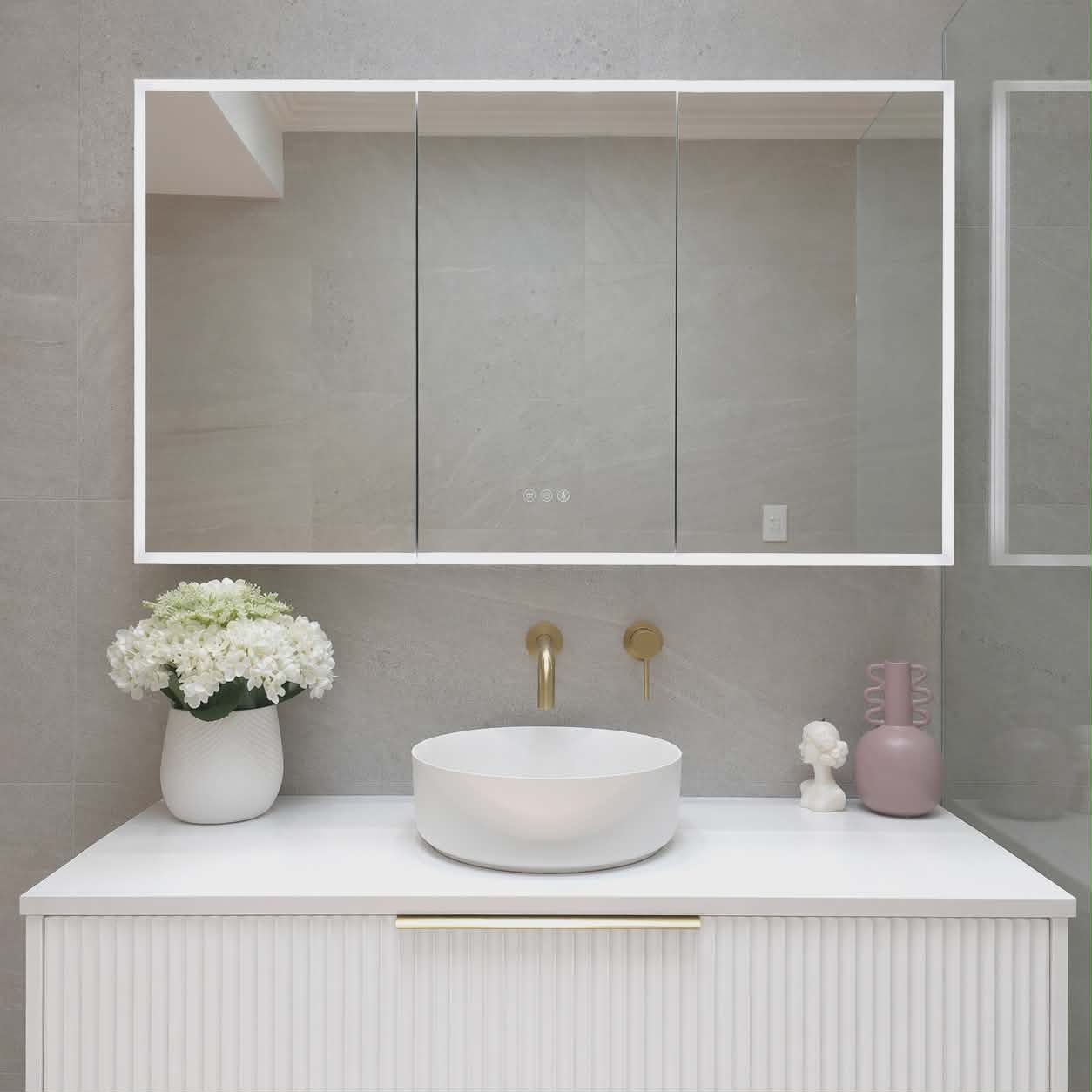

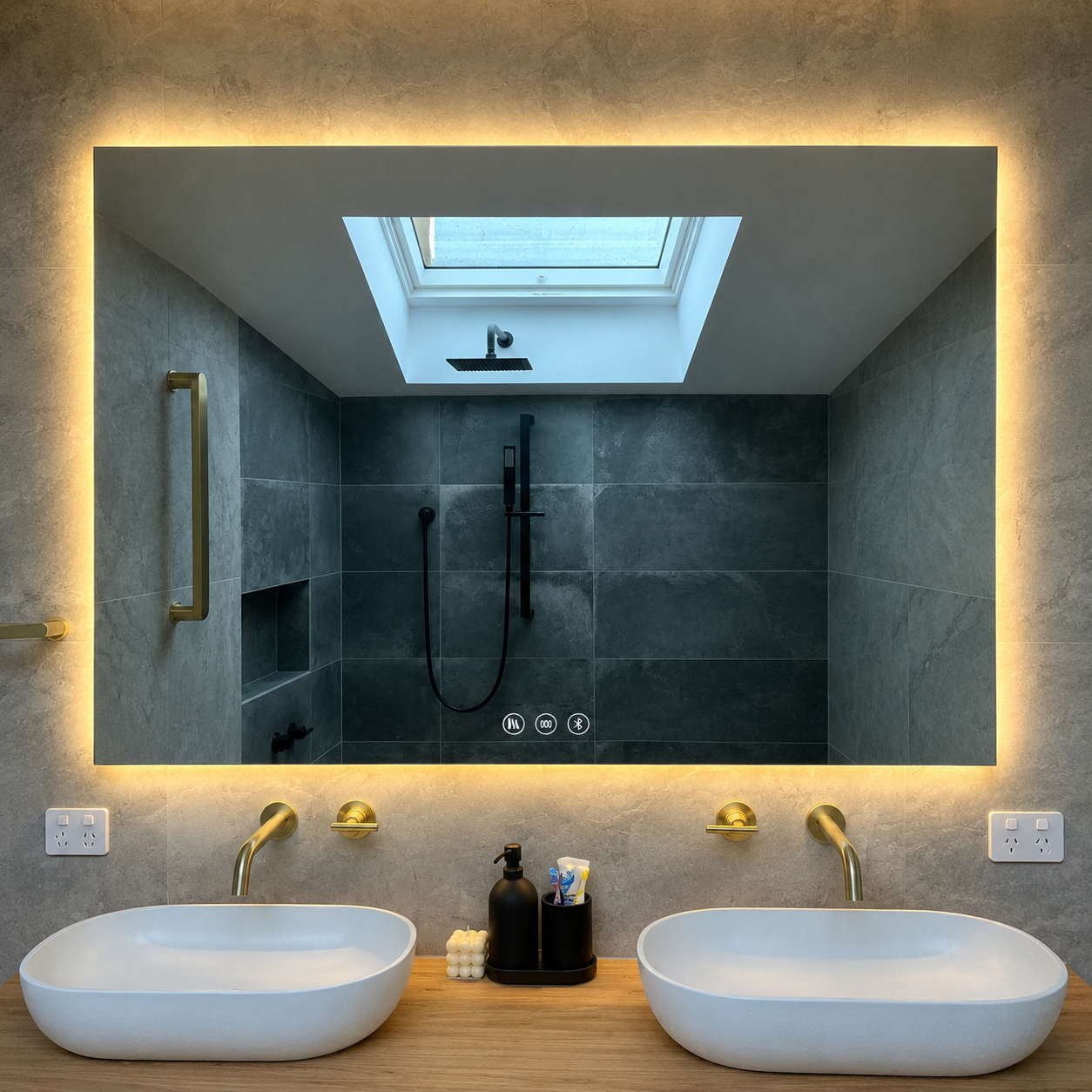
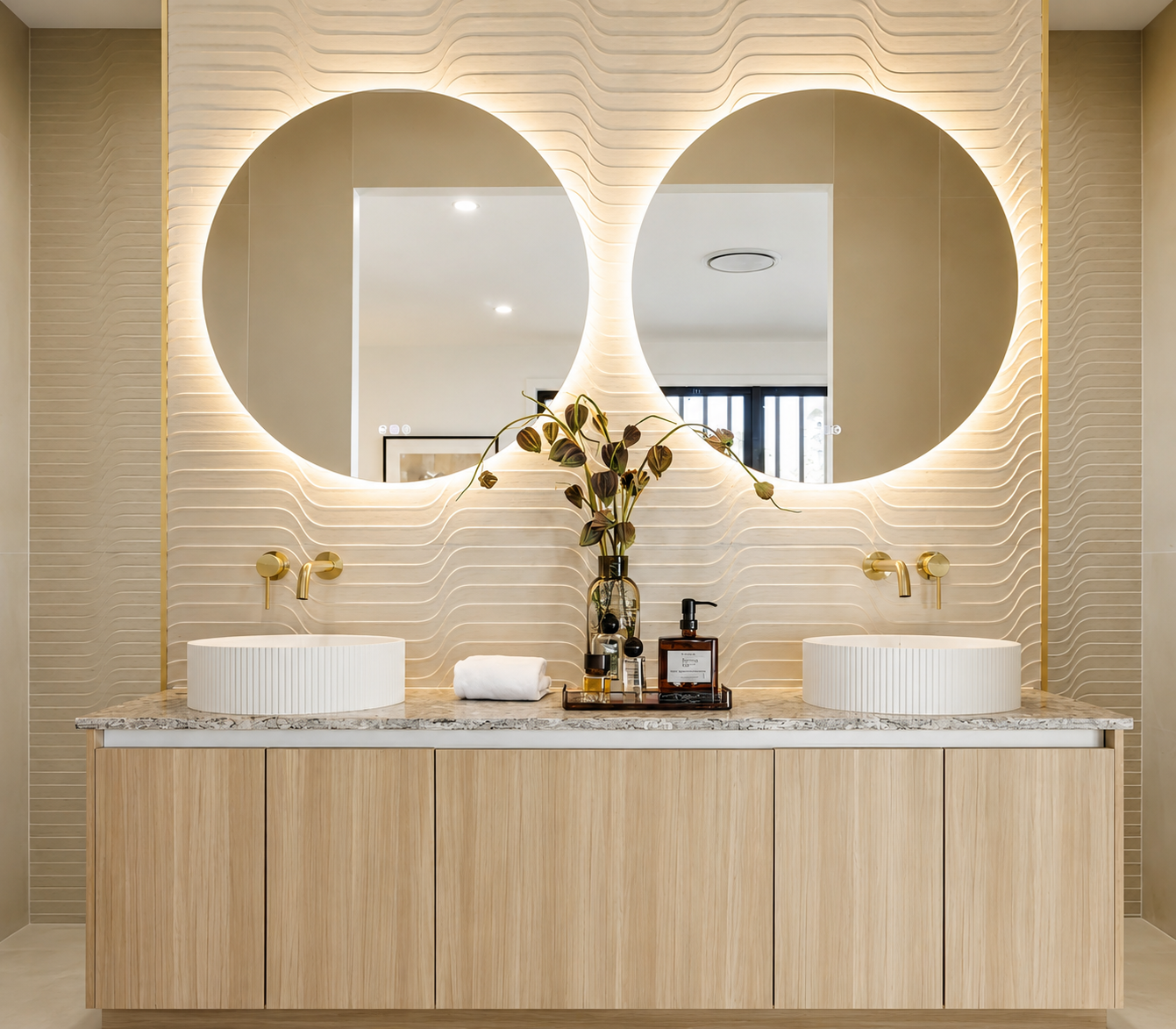
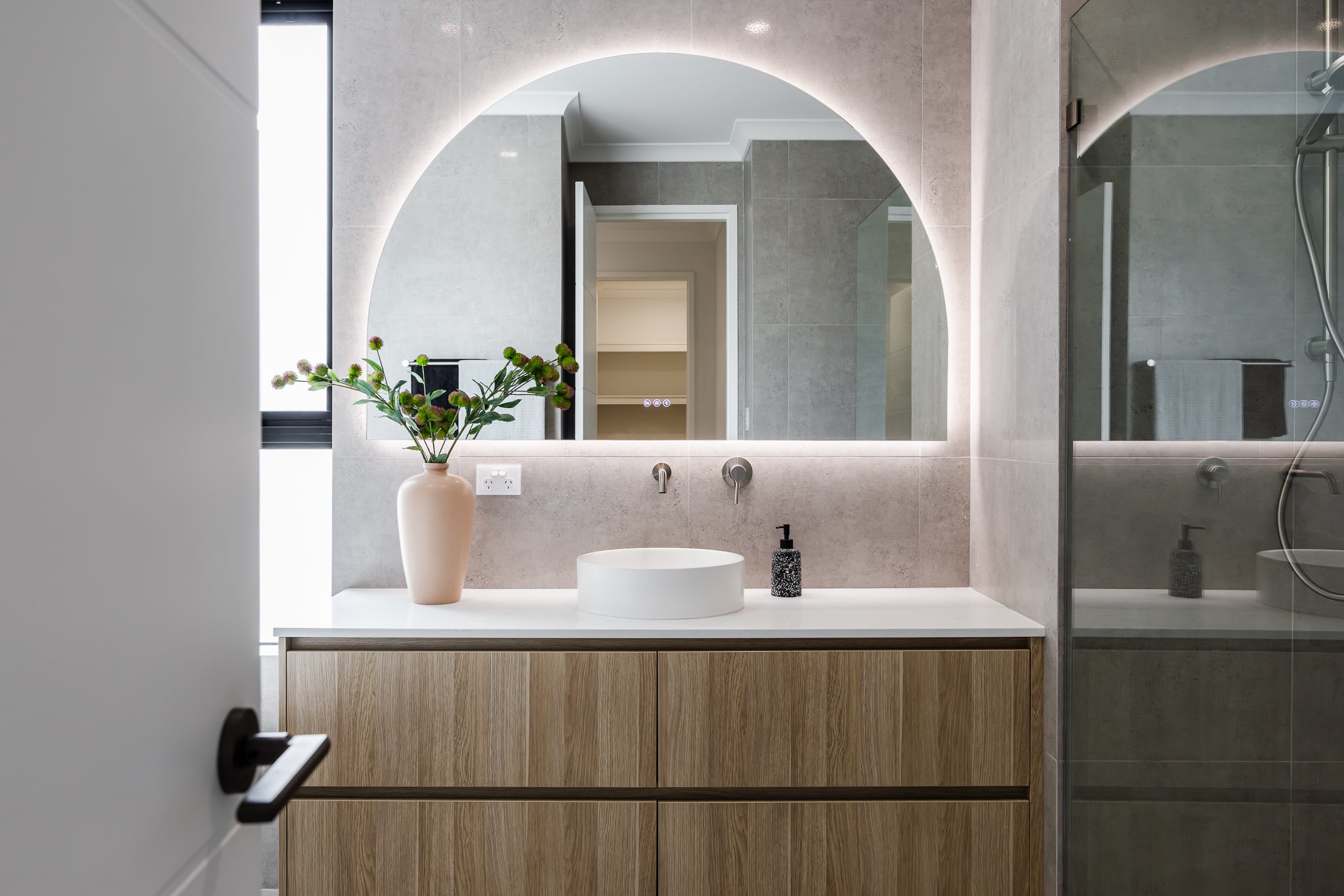




Lighting is one of the most overlooked decisions in a bathroom renovation — and one of the most consequential. A bathroom finished with the best tile, stone and tapware money can buy will still feel flat and underwhelming under a single cool-white downlight. Lighting isn't a finishing touch; it's the layer that determines whether every other decision actually reads the way it was intended to.
This guide explains how professional lighting designers actually plan a bathroom — the layers, the colour temperature choices, and how a well-designed LED mirror fits into that plan rather than replacing it.
11 min read · Last reviewed 23 July 2026 · Written by the InVogue Mirrors & Bathware team
Why Trust InVogue Mirrors & Bathware? InVogue is an Australian-designed mirror and bathware brand trusted in over 10,000 New Zealand homes, specialising in LED bathroom mirrors and mirror cabinets. The lighting guidance in this article reflects the same layered-lighting principles used by professional interior and lighting designers, not marketing claims about any single product.
Quick Answer
- Layer your lighting: combine ambient, task and accent light rather than relying on one ceiling downlight.
- Light the face, not just the room: mirror lighting has more impact on daily routines than ceiling light alone.
- Choose colour temperature deliberately: warmer light suits relaxing, cooler light suits precise grooming tasks.
- Add dimming wherever possible — it changes a bathroom's mood more than almost any other single upgrade.
The Three Layers of Bathroom Lighting
Ambient lighting is the general light that fills the room — usually ceiling downlights or an overhead fixture — and sets the overall brightness level. On its own, ambient light is rarely enough: it lights the room but leaves faces in shadow. Task lighting is focused, functional light positioned specifically for grooming tasks like shaving, makeup application and skincare, typically delivered through mirror lighting positioned at face height. Accent lighting is the layer most bathrooms skip entirely — subtle lighting used to highlight a feature, such as a niche, a freestanding bath or a piece of stone benchtop, adding depth rather than just brightness.
The best bathrooms combine all three layers rather than relying on any single one. Ambient light alone feels flat and clinical; task light alone leaves the rest of the room in darkness; accent light alone isn't enough to function by. Together, they create a room that's both practical and genuinely considered.
Designer Insight: the most luxurious bathrooms rarely rely on one light source. It's the combination of layers — not the brightness of any single fitting — that creates the sense of depth people associate with a well-designed space.

Why Mirror Lighting Matters
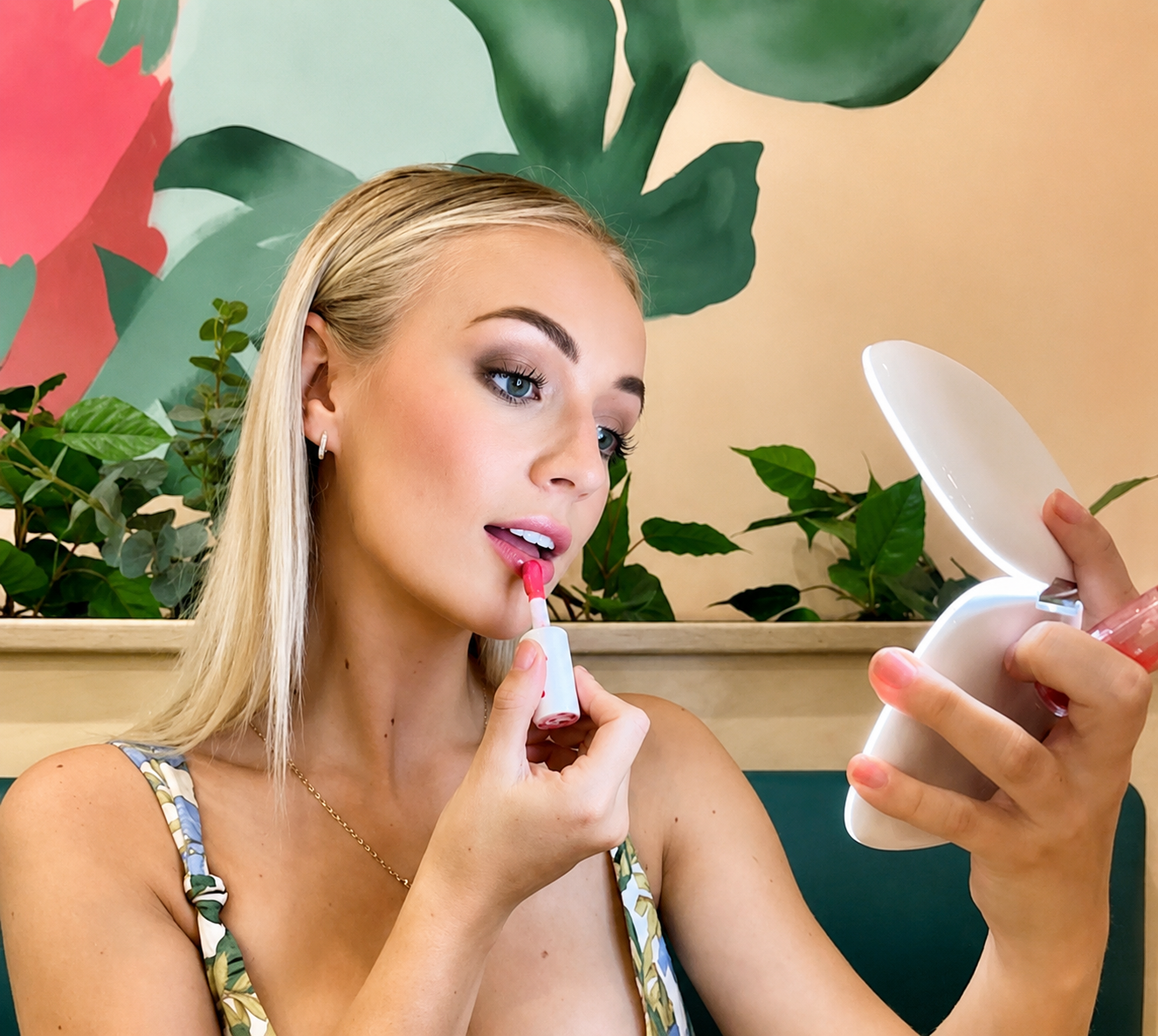
Mirror lighting is the task layer most bathrooms genuinely depend on every day. Overhead ceiling light alone casts shadows downward across the face — under the eyes, under the chin, along the sides of the nose — making shadow-free illumination from the mirror itself essential for makeup application, shaving and skincare routines where accuracy matters. This is also why mirror lighting affects how a bathroom performs for the two or three routines a household runs through it every single morning, far more than any other design decision in the room.
The two main approaches — frontlit and backlit — solve this shadow problem differently, which is worth understanding before choosing either. For a full breakdown of how each performs, see our Frontlit vs Backlit LED Bathroom Mirrors guide, and for a deeper look at the features available on modern LED mirrors, see our LED Mirror Features Explained guide.
Designer Insight: mirror lighting often has more impact on how a bathroom feels day to day than adding extra ceiling lights. It's the one fixture used at close range, every single time the room is used, which makes it worth prioritising over general room brightness.

Choosing the Right Colour Temperature
Colour temperature, measured in Kelvin, is one of the simplest ways to understand how light will feel in a room. As a general industry reference point, 3000K produces a warm, soft light suited to relaxing evening routines and bathrooms aiming for a hotel or spa feel. 4000K sits in a neutral middle ground, offering clear, natural-feeling light suited to everyday grooming tasks without feeling clinical. 6500K produces a cool, bright daylight-style light, generally reserved for precise tasks in bathrooms that prioritise function over atmosphere.
Rather than committing to one setting permanently, many of today's LED mirrors offer adjustable colour temperature, letting a single mirror shift from a warm evening glow to a brighter, more neutral setting for the morning routine. This flexibility is one of the most genuinely useful upgrades available in modern bathroom lighting, since it means the room doesn't have to compromise between mood and function.
Designer Insight: dimming dramatically changes a bathroom's evening ambience, often more noticeably than colour temperature alone. A bright, functional setting for the morning and a dimmed, warmer setting for the evening can come from the same fitting, provided dimming is planned for from the start.
Frontlit vs Backlit vs Combined Lighting
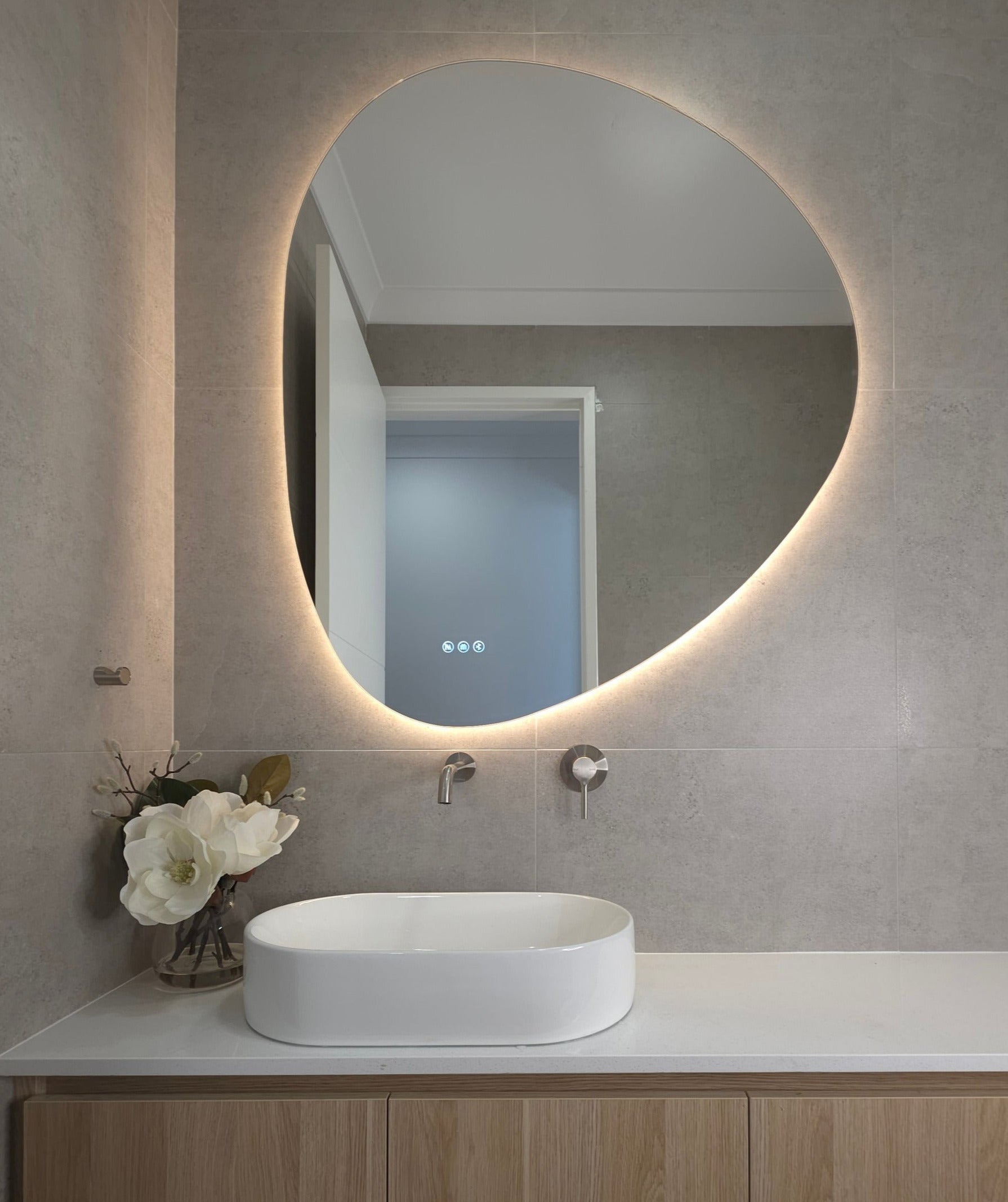
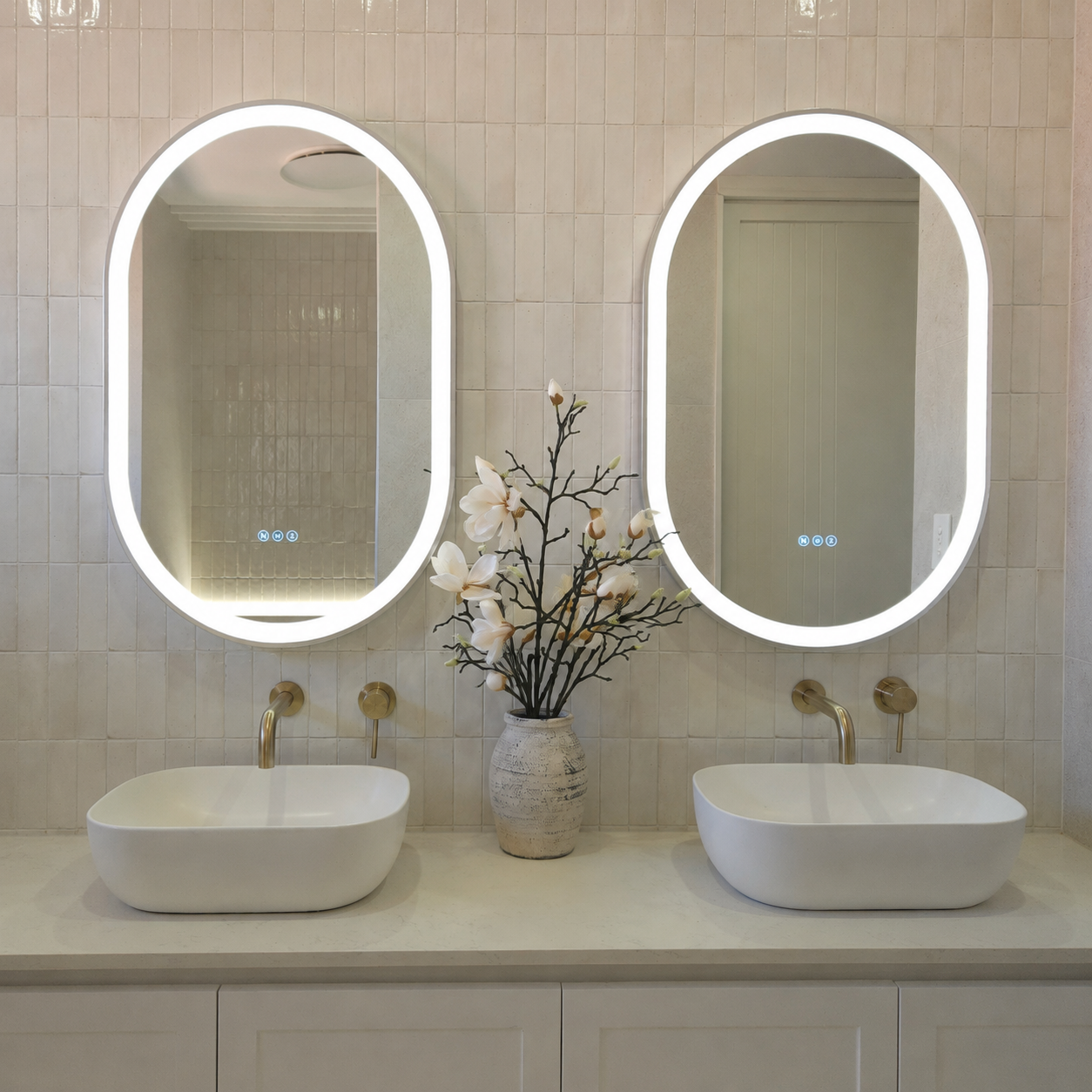
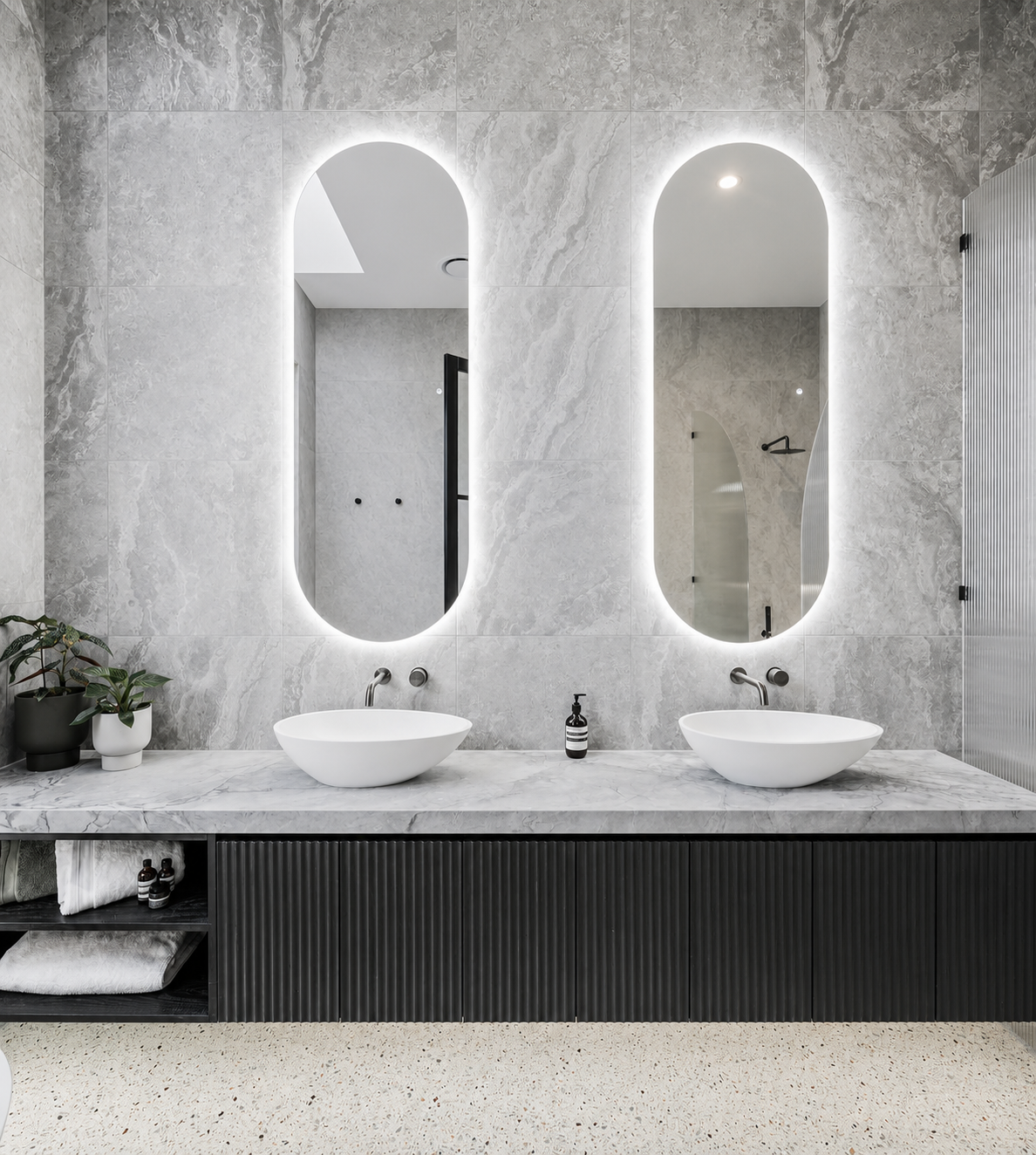
Frontlit mirrors direct light forward onto the face, delivering strong, even task lighting that suits precise grooming and family bathrooms where function comes first. Backlit mirrors illuminate from behind the glass, creating a soft ambient halo that suits luxury and relaxation-focused bathrooms. Combined lighting mirrors offer both in one fixture, giving the flexibility to shift between a bright, functional setting and a softer ambient one depending on the time of day. For the full comparison, including which bathroom types suit each approach, see our Frontlit vs Backlit LED Bathroom Mirrors guide.
Planning Lighting for Different Bathroom Types
Small Bathrooms
Small bathrooms benefit most from a single, well-placed mirror light rather than multiple competing fixtures — one considered light source, sized to the vanity, is more effective than several small ones fighting for the same wall.
 Family Bathrooms
Family bathrooms need durable, even, frontlit task lighting that performs reliably for multiple users across busy mornings, with ambient ceiling light providing the general fill.
 Ensuites
Ensuites can generally support a slightly more atmospheric approach, combining task lighting at the mirror with dimmable ambient light for a room used both first thing in the morning and last thing at night.

Luxury Bathrooms
Luxury bathrooms benefit most from full layering — ambient, task and accent light working together, usually with backlit mirror lighting doing much of the atmospheric work.

Powder Rooms
Powder rooms, used briefly and rarely for detailed grooming, can prioritise atmosphere over strict task performance — a backlit mirror alone is often enough to carry the whole room.

Double Vanities
Double vanities need consistent lighting across both mirrors — matching brightness, colour temperature and lighting style on each side is what makes the pair feel intentional rather than mismatched.

Lighting Around Mirrors
Mirror placement affects lighting performance as much as the light fitting itself — a mirror hung at the correct height for the household ensures task lighting actually falls across the face rather than the collar or the wall above. For full placement guidance, see our How High Should You Hang a Bathroom Mirror? guide.
Ceiling lights and wall sconces can support the mirror's task lighting, but positioning matters: a downlight directly above the mirror creates the same downward shadow the mirror light is meant to solve, while sconces mounted either side at face height help fill in shadows more evenly. Natural light, where available, is worth designing around rather than working against — orienting the vanity to make the most of a window can reduce how much artificial light is needed during the day. Avoiding facial shadows altogether comes down to combining these sources thoughtfully rather than relying on any single fitting to do the whole job.
Designer Insight: layered lighting creates depth in a way flat, single-source lighting never can. A room lit from one angle only tends to look one-dimensional in photos and feel slightly clinical in person, even when the fittings themselves are high quality.
For a broader look at how lighting fits into the full mirror-buying decision, see our Ultimate Bathroom Mirror Buying Guide.

Common Bathroom Lighting Mistakes
- Relying on a single ceiling downlight: lights the room but leaves the face in shadow.
- Cool white everywhere: can feel clinical rather than considered, especially in the evening.
- Poor mirror lighting: the single most common reason a bathroom underperforms for everyday routines.
- Uneven brightness: bright in one corner, dim in another, undermines the whole room.
- Ignoring dimming: missing one of the simplest ways to shift a room's mood.
- No layered lighting: treating one light source as if it can do the job of three.
Designer Insight: lighting quality is often more important than lighting quantity. A single, well-tempered, correctly positioned light source will outperform several mismatched or harshly angled fittings every time.
Expert Designer Recommendations
Designer's Rules
- Plan lighting in layers from the start, not as an afterthought once fixtures are chosen.
- Prioritise mirror lighting — it affects daily routines more than any other fixture in the room.
- Add dimming wherever the budget allows.
- Choose light quality over light quantity — a well-placed, well-tempered light beats several harsh ones.
Comparison Tables
Lighting Layer → Purpose
| Lighting Layer | Purpose |
|---|---|
| Ambient | General room brightness |
| Task | Shadow-free light for grooming tasks |
| Accent | Highlights features, adds depth |
Colour Temperature → Best Use
| Colour Temperature | Best Use |
|---|---|
| 3000K (warm) | Evening relaxation, hotel-style ambience |
| 4000K (neutral) | Everyday grooming, natural-feeling light |
| 6500K (cool) | Precise tasks, function-first bathrooms |
Bathroom Type → Recommended Lighting
| Bathroom Type | Recommended Lighting |
|---|---|
| Small bathroom | Single well-placed mirror light |
| Family bathroom | Frontlit, even, durable task lighting |
| Ensuite | Task lighting plus dimmable ambient |
| Luxury bathroom | Full layering — ambient, task and accent |
| Powder room | Backlit mirror as primary light source |
| Double vanity | Matched lighting across both mirrors |
Mirror Lighting → Advantages
| Mirror Lighting Style | Advantage |
|---|---|
| Frontlit | Strong, even, reliable task light |
| Backlit | Soft ambience, hotel-like atmosphere |
| Combined | Flexibility across both function and mood |
Lighting Mistake → Better Solution
| Mistake | Better Solution |
|---|---|
| Single ceiling downlight | Add dedicated mirror task lighting |
| Cool white everywhere | Use adjustable or warmer colour temperature |
| Poor mirror lighting | Choose a mirror with shadow-free, face-height light |
| Uneven brightness | Plan ambient and task light together, not separately |
| No dimming | Add dimmable fittings wherever possible |
| No layered lighting | Combine ambient, task and accent light |
Frequently Asked Questions
What is the best lighting for a bathroom?
A layered combination of ambient, task and accent lighting performs better than any single light source, with task lighting at the mirror doing the most work for daily routines.
Should bathroom mirrors be backlit?
Backlit mirrors suit bathrooms prioritising atmosphere and a hotel-like feel; frontlit suits bathrooms prioritising strong, even task light. Many households prefer a combined mirror that offers both.
Is warm or cool light better?
Neither is universally better — warm light suits relaxation and evening use, while cooler light suits precise grooming tasks. Adjustable colour temperature avoids having to choose between the two.
What colour temperature is best for makeup?
A neutral setting around 4000K is generally the most reliable reference point for makeup application, as it renders colour closer to natural daylight than either very warm or very cool settings.
How bright should a bathroom be?
Bright enough for confident task performance without feeling clinical — dimming allows the same fittings to suit both a bright morning routine and a softer evening one.
Do LED mirrors replace vanity lights?
A well-lit LED mirror can replace the need for separate vanity lights in many bathrooms, though ambient ceiling light is still needed to light the rest of the room.
Designer's Cheat Sheet
Designer's Cheat Sheet
- ✔ One light source? → Add at least a second layer
- ✔ Precise grooming tasks? → Frontlit, 4000-6500K
- ✔ Want a hotel feel? → Backlit, warm, dimmed
- ✔ Undecided on colour temperature? → Choose an adjustable mirror
- ✔ Want it to feel expensive? → Add dimming before adding more fittings
Conclusion
Great bathroom lighting isn't about the brightest fittings or the most expensive finishes — it's about layering ambient, task and accent light so the room performs well at every time of day and every routine it needs to support. Thoughtful lighting design changes not just how a bathroom looks in photos, but how it functions every single morning and evening, which is exactly why it deserves the same planning as the tile, the tapware and the vanity.
Ready to bring layered lighting into your own bathroom? Explore our complete Smart Mirrors and Mirror Cabinets collections, or browse our Best Sellers if you're not sure where to start.
Where To Next?
- Start here: The Ultimate Bathroom Mirror Buying Guide
- Related guides: Frontlit vs Backlit LED Bathroom Mirrors, LED Mirror Features Explained, How High Should You Hang a Bathroom Mirror?, Bathroom Mirror Ideas: 25 Designer-Approved Ideas for Every Bathroom Style, How to Choose the Perfect Bathroom Mirror Style for Your Home, Best Bathroom Mirrors for Small Bathrooms and Double Vanity Mirror Guide: One Large Mirror or Two Mirrors?
- Browse: the full Smart Mirrors range
- Need storage: the full Mirror Cabinets range
- Not sure where to start: our Best Sellers


