


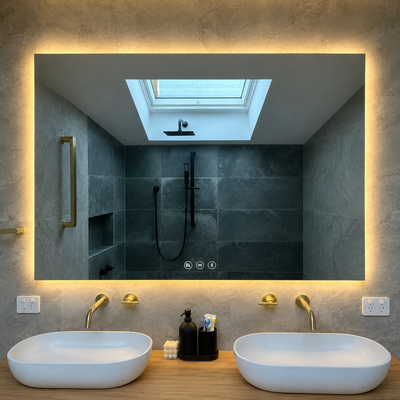

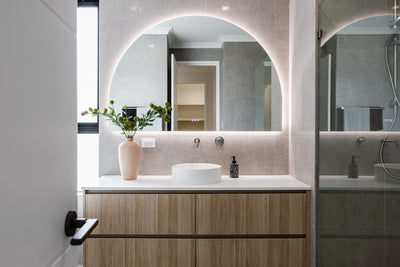
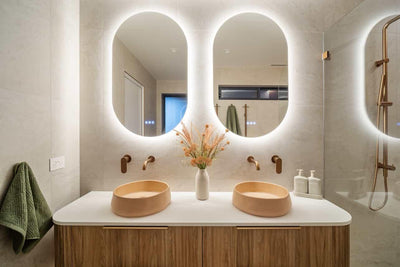
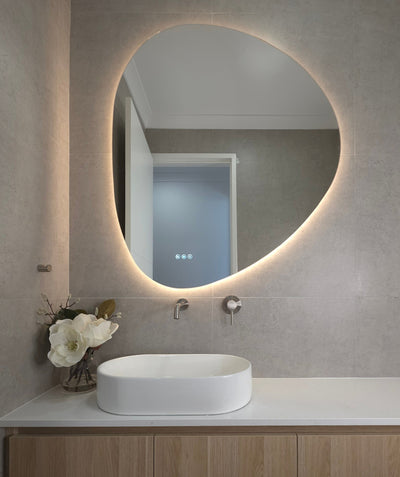
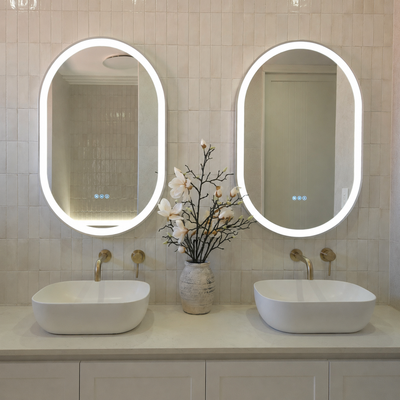
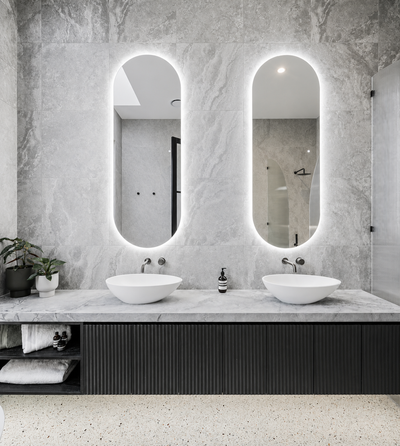



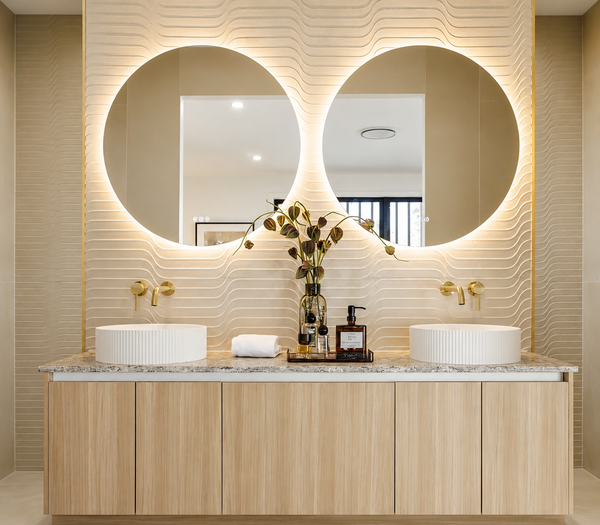
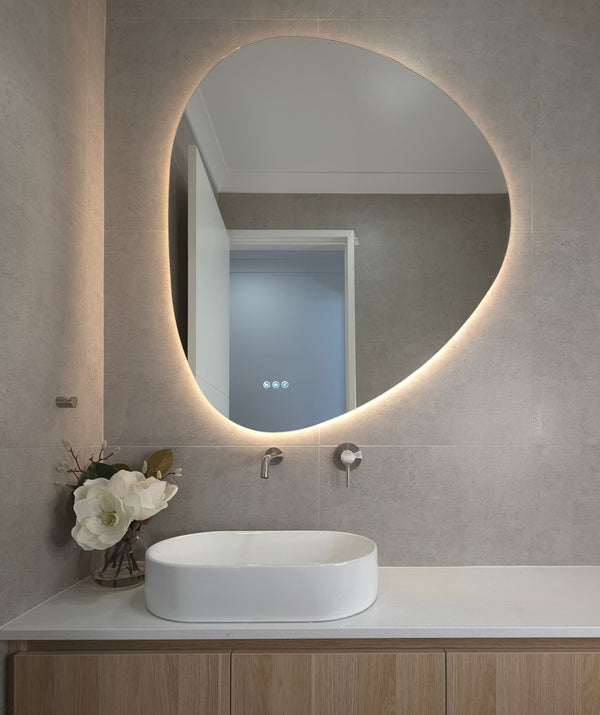
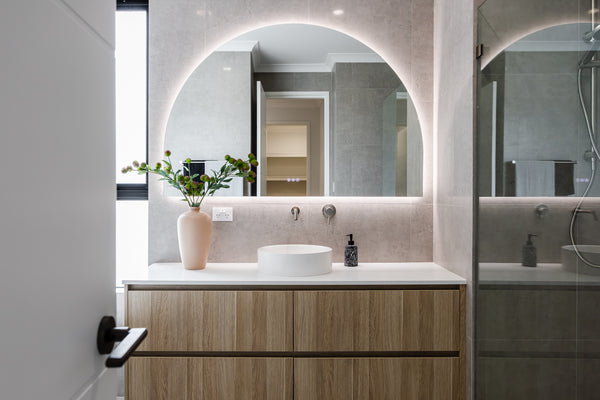
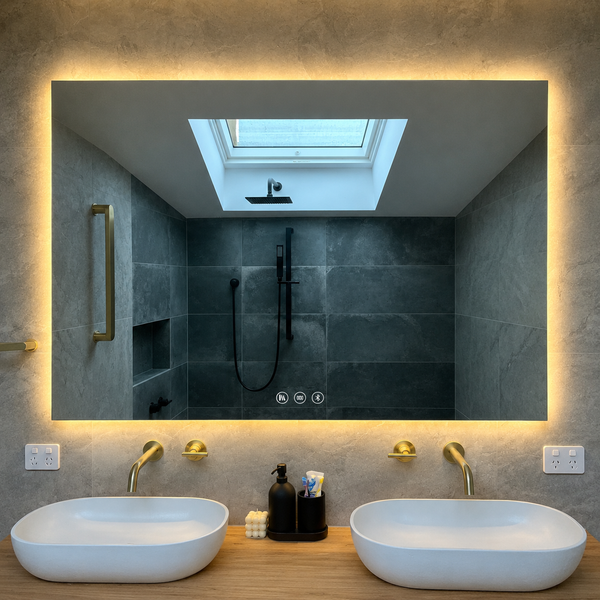
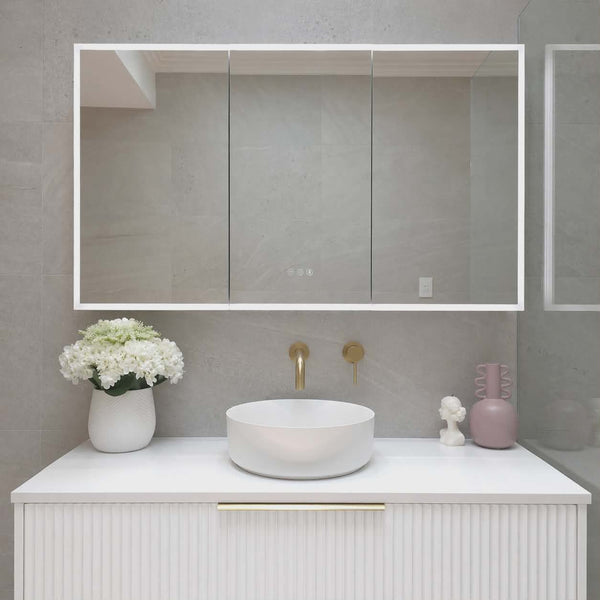

Storage is one of the biggest factors influencing how spacious and luxurious a bathroom feels — often more than the tile, the tapware or even the mirror itself. A bathroom with everything in its place, benchtop clear, reads as considered and calm. The same bathroom with toiletries, bottles and hair tools left out on every surface feels smaller and busier, regardless of how much was spent on finishes.
Reducing visual clutter frequently has a greater impact on how a bathroom feels than adding expensive materials ever will. This guide brings together 23 practical storage ideas, the planning principles behind them, and why mirror cabinets in particular are one of the smartest ways to solve storage without sacrificing style.
Why Trust InVogue Mirrors & Bathware? InVogue is a mirror and bathware brand trusted in over 20,000 homes, specialising in LED bathroom mirrors and mirror cabinets. The storage principles in this guide reflect genuine daily-use planning, not just decorative trends.
Quick Answer
- Hide more than you display — a clear benchtop consistently reads as more luxurious than an open, styled one.
- Plan storage around daily routines, not just available wall space.
- Use vertical space — most bathrooms under-use the wall above the vanity and beside the mirror.
- A mirror cabinet solves more storage problems per square centimetre than almost any other single fixture.
The 23 Storage Ideas
1. LED Mirror Cabinets
An LED mirror cabinet combines lighting, mirror and hidden storage in a single fixture, solving three needs without adding to the room's footprint. It suits almost every bathroom type, from compact ensuites to family bathrooms.
Designer Insight: this is usually the single highest-value storage decision in a renovation, since it replaces what would otherwise be three separate fixtures.

2. Floating Vanities
A floating vanity opens up the floor beneath it for additional storage baskets or simply visual space, making the whole room feel larger. It suits contemporary and minimalist bathrooms particularly well.
Designer Insight: the visible floor beneath a floating vanity does more for a room's sense of space than most people expect.
3. Full-Height Cabinetry
A tall, narrow cabinet makes use of vertical wall space that's rarely otherwise used, providing significant storage without consuming valuable floor area. It suits family bathrooms and any household needing more capacity than a vanity alone provides.
Designer Insight: full-height storage is one of the most overlooked opportunities in bathroom renovations, since most designs stop storage planning at the vanity.
4. Drawer Organisers
Internal drawer dividers keep smaller items like makeup, skincare and grooming tools separated and visible at a glance, rather than jumbled together. This suits any household wanting faster, calmer morning routines.
Designer Insight: an organised drawer reduces decision fatigue in the morning far more than its size would suggest.
5. Open Shelving
Open shelving works best in moderation, displaying a small number of considered items — folded towels, a single plant, a candle — rather than everyday clutter. It suits Scandinavian, coastal and Japandi bathrooms where a little warmth and texture is welcome.
Designer Insight: open shelving should be treated as display space, not overflow storage, or it quickly undermines the room's calm.
6. Recessed Niches
A niche built into the shower or vanity wall provides storage without protruding into the room at all, keeping the space visually clean. It suits contemporary and luxury bathrooms planned during a full renovation.
Designer Insight: a niche needs to be planned before tiling — it's one of the hardest storage features to retrofit later.
7. Double Vanity Storage
Matching storage on both sides of a double vanity — whether twin cabinets or a single wide one — keeps the arrangement feeling balanced and prevents one side becoming a dumping ground. It suits any household sharing a bathroom daily.
Designer Insight: uneven storage allocation is one of the most common sources of daily friction on a shared double vanity.

8. Vertical Storage
Making use of the wall space between the vanity and ceiling — via tall cabinetry or stacked shelving — adds capacity without expanding the room's footprint. It suits small and narrow bathrooms especially well.
Designer Insight: most bathrooms only use the bottom third of their available wall height for storage.
9. Hidden Power Storage
An internal power outlet inside a mirror cabinet lets electric toothbrushes and shavers charge completely out of sight, removing one of the most common sources of benchtop clutter. It suits every bathroom type, but especially family bathrooms with multiple charging devices.
Designer Insight: cord clutter is one of the fastest ways to undo an otherwise clean, considered benchtop.
10. Adjustable Shelving
Shelving that can be repositioned as storage needs change keeps a cabinet useful for years rather than only suiting the household's needs at the time of purchase. It suits growing families in particular.
Designer Insight: fixed shelving is one of the quickest ways a storage solution becomes outdated as a household's needs change.
11. Laundry Integration
A dedicated hamper or laundry storage zone within the bathroom keeps dirty linen contained and out of sight, rather than accumulating on the floor. It suits family bathrooms and ensuites used as part of a daily routine.
Designer Insight: laundry storage is easy to forget during planning, yet it's one of the most-used storage zones in the entire bathroom.
12. Towel Storage
Dedicated towel storage — a drawer, shelf or heated rail — near the shower or bath keeps towels accessible without leaving them draped over every surface. It suits all bathroom types, but especially family and guest bathrooms.
Designer Insight: towel storage positioned near the point of use gets used properly; storage positioned elsewhere in the room usually doesn't.
13. Makeup Organisation
A shallow, dedicated drawer or cabinet shelf sized specifically for makeup keeps small items from cluttering a shared benchtop. It suits ensuites and family bathrooms with daily makeup routines.
Designer Insight: makeup is one of the most benchtop-clutter-prone categories in any bathroom, and one of the easiest to solve with dedicated storage.
14. Hair Tool Storage
A dedicated, heat-safe drawer or vertical slot for hair straighteners and dryers keeps hot tools contained and off the benchtop between uses. It suits any bathroom used for daily hair routines.
Designer Insight: hair tools left out on a benchtop are one of the most common and easily solved clutter sources in a bathroom.
15. Guest Bathroom Essentials
A small, well-stocked cabinet with guest essentials — spare toiletries, fresh towels — keeps a guest bathroom presentable without requiring daily restocking. It suits bathrooms used occasionally rather than every day.
Designer Insight: a guest bathroom's storage needs are about presentation and preparedness, not daily capacity.
16. Family Bathroom Zones
Dividing storage into zones — one per family member, or one per routine — reduces the daily negotiation over shared space. It suits busy family bathrooms with multiple users each morning.
Designer Insight: zoned storage reduces morning friction more effectively than simply adding more total storage volume.

17. Small Bathroom Organisation
In a small bathroom, a single, well-proportioned cabinet sized to the vanity solves more than several smaller storage pieces competing for the same limited wall space. It suits compact ensuites and powder rooms.
Designer Insight: in a small bathroom, one confident storage decision beats several smaller compromises.
18. Apartment Storage
A compact, surface-mounted mirror cabinet solves an apartment bathroom's two biggest constraints — floor space and storage — without any structural work. It suits rentals and apartments with limited renovation scope.
Designer Insight: in an apartment bathroom, every fixture needs to do at least two jobs to justify its footprint.

19. Minimalist Styling
Storing the majority of everyday items out of sight, leaving only one or two considered objects on display, creates the calm, uncluttered look associated with minimalist bathrooms. It suits Scandinavian, Japandi and contemporary interiors.
Designer Insight: minimalist styling is really just disciplined storage planning presented as an aesthetic.
20. Decorative Storage Baskets
A single woven or stone basket for spare towels or toiletries adds texture while still functioning as genuine storage, rather than purely decorative styling. It suits coastal, Japandi and organic modern bathrooms.
Designer Insight: decorative storage works best when it's still doing real work — a basket that's never actually used tends to look staged rather than lived-in.
21. Under-Vanity Lighting
A soft light strip beneath a floating vanity highlights the storage area beneath it while adding a subtle luxury touch to the room after dark. It suits luxury and contemporary bathrooms with floating vanities.
Designer Insight: under-vanity lighting is a small addition that consistently reads as a considered, higher-end detail.
22. Daily-Use Organisation
Positioning the items used every single day — toothbrushes, cleanser, daily medication — at the most accessible height and location, while storing occasional-use items further away, keeps routines efficient. It suits every bathroom type.
Designer Insight: organising by frequency of use, rather than by category alone, is the single most useful storage planning principle.
23. Future-Proof Storage Planning
Choosing adjustable shelving and flexible configurations over fixed, single-purpose storage means the bathroom can adapt as a household's needs change over time. It suits any household planning to stay in the home long-term.
Designer Insight: a small amount of flexibility built in at the planning stage is far cheaper than retrofitting storage later.
Storage Planning Principles
Effective storage planning starts with daily routines — understanding what's used every day versus occasionally shapes where everything should live. Accessibility means placing frequently used items where they can be reached without effort, while decluttering regularly prevents storage from silently filling with items no longer needed. Visibility matters too — a drawer organiser that shows everything at a glance gets used properly, while a deep, unsorted drawer becomes a dumping ground.
Frequency of use should guide placement more than category alone — daily items at the most accessible height, occasional items further away. Family requirements mean planning for multiple users with different routines and needs, and long-term flexibility ensures the storage solution still works as those needs inevitably change.
Designer Insight: good storage reduces decision fatigue during busy mornings. When everything has an obvious place, the small daily friction of searching, moving and re-finding items disappears almost entirely.

Storage by Bathroom Type
Small Bathrooms
Prioritise one well-proportioned cabinet over several smaller pieces, and make use of vertical wall space above the vanity.
Family Bathrooms
Zone storage by family member or routine, and choose wide-format cabinetry with adjustable shelving to accommodate multiple users.
Luxury Ensuites
Favour fully concealed storage — recessed cabinets and niches — so the room reads as considered rather than functional.
Apartments
Choose compact, surface-mounted solutions that solve storage without requiring structural work or consuming floor space.
Guest Bathrooms
Keep storage simple and focused on presentation and guest essentials rather than daily capacity.
Powder Rooms
Storage needs are minimal here — a small cabinet or a single considered basket is usually sufficient.
Why Mirror Cabinets Are One of the Best Storage Solutions
Mirror cabinets solve more storage problems per square centimetre of wall space than almost any other bathroom fixture. Hidden storage keeps toiletries and grooming essentials out of sight, directly supporting reduced clutter on the benchtop below. Because the storage sits within the existing mirror footprint, mirror cabinets achieve genuine space efficiency without consuming any additional floor area. Many models also offer lighting integration, combining task lighting with storage in the same fixture, and the overall result is improved routines — everything needed for a morning or evening routine within easy reach, and nothing left cluttering the room.
For a full breakdown of features, sizing and installation types, see our Ultimate Mirror Cabinet Buying Guide, and for help deciding between a cabinet and a standard mirror, see our Mirror Cabinet or Bathroom Mirror? guide.
Designer Insight: luxury bathrooms usually hide far more than they display. The considered, calm feeling of a high-end bathroom rarely comes from more visible objects — it comes from fewer of them, with everything else stored out of sight.
Common Storage Mistakes
- Too many open shelves: quickly becomes visual clutter rather than considered display.
- Poor drawer organisation: an unsorted drawer is barely more useful than no storage at all.
- Ignoring vertical space: most bathrooms only use the lower third of the available wall height.
- No electrical storage: leaves charging devices and cords cluttering the benchtop.
- Buying furniture that's too deep: can make a small bathroom feel cramped rather than better organised.
- Storing everything at eye level: wastes the more accessible height range on items rarely used.
- No flexibility for changing needs: fixed storage that suited the household at purchase can quickly fall short.
Expert Designer Recommendations
Designer's Rules
- Plan storage around daily routines, not just available wall space.
- Hide more than you display — a clear benchtop reads as more luxurious than a styled one.
- Choose adjustable, flexible storage over fixed configurations wherever possible.
- Use vertical space before adding more floor-based storage.
Comparison Tables
Storage Solution → Best Application
| Storage Solution | Best Application |
|---|---|
| LED mirror cabinet | Almost any bathroom, highest overall value |
| Recessed niche | Showers, full renovations |
| Full-height cabinetry | Family bathrooms needing extra capacity |
| Open shelving | Styled display, used sparingly |
Bathroom Type → Recommended Storage
| Bathroom Type | Recommended Storage |
|---|---|
| Small bathroom | Single well-proportioned cabinet |
| Family bathroom | Zoned, wide-format cabinetry |
| Luxury ensuite | Fully concealed, recessed storage |
| Apartment | Compact, surface-mounted cabinet |
| Guest bathroom | Simple, presentation-focused storage |
| Powder room | Minimal — small cabinet or basket |
Household Size → Storage Priorities
| Household Size | Storage Priorities |
|---|---|
| Single occupant | Compact, well-organised single cabinet |
| Couple | Matched double vanity storage |
| Family with children | Zoned storage, adjustable shelving, extra capacity |
Storage Location → Everyday Benefit
| Storage Location | Everyday Benefit |
|---|---|
| Mirror cabinet | Hidden, at-hand storage with lighting |
| Under-vanity | Bulkier items, out of sight |
| Recessed niche | Shower essentials, no protrusion |
| Open shelf | Considered display, quick access |
Open vs Concealed Storage
| Storage Type | Best Use |
|---|---|
| Open storage | A small number of considered, styled items |
| Concealed storage | Everyday toiletries, tools and clutter-prone items |
Frequently Asked Questions
How do I increase bathroom storage?
Start with a mirror cabinet — it adds meaningful storage without consuming floor space — then look at vertical wall space and under-vanity storage as secondary options.
Are mirror cabinets worth it?
Yes, for most households. They solve storage, lighting and mirror needs in one fixture, which typically outweighs the modest additional cost over a standard mirror.
How do I organise a small bathroom?
Choose one well-proportioned cabinet rather than several smaller storage pieces, and make use of vertical wall space above the vanity.
Should everything be hidden?
Not entirely — a small number of considered, styled items on open display can add warmth, but the majority of everyday items are best kept concealed to avoid clutter.
How much storage does a family need?
More than a single-occupant bathroom, generally with zoned storage per family member and adjustable shelving to accommodate changing needs over time.
What storage works best in apartments?
A compact, surface-mounted mirror cabinet, since it solves storage without requiring structural work or consuming floor space.
Designer's Cheat Sheet
Designer's Cheat Sheet
- ✔ Not sure where to start? → A mirror cabinet solves the most problems at once
- ✔ Small bathroom? → One considered cabinet, not several smaller pieces
- ✔ Family bathroom? → Zone storage by person or routine
- ✔ Want it to feel luxurious? → Hide more than you display
- ✔ Planning long-term? → Choose adjustable, flexible storage
Conclusion
Good bathroom storage isn't about owning more space — it's about planning the space you have more intelligently. A bathroom that organises daily routines by frequency of use, hides more than it displays, and builds in flexibility for changing needs will consistently feel calmer and more spacious than one with simply more square metres and no plan. Thoughtful storage improves not just how a bathroom looks, but how it functions and how much it's genuinely enjoyed every day.
Ready to bring better storage into your own bathroom? Explore our complete Mirror Cabinets and Smart Mirrors collections, or browse our Best Sellers if you're not sure where to start.
Where To Next?
- Start here: The Ultimate Mirror Cabinet Buying Guide (2026 Edition)
- Related guides: Mirror Cabinet or Bathroom Mirror?, Bathroom Renovation Mistakes: 21 Costly Mistakes to Avoid Before You Build, Best Bathroom Mirrors for Small Bathrooms, Double Vanity Mirror Guide: One Large Mirror or Two Mirrors?, Bathroom Lighting Guide, The Ultimate Bathroom Mirror Buying Guide (2026 Edition) and LED Mirror Features Explained
- Browse: the full Mirror Cabinets range
- Explore: the full Smart Mirrors range
- Not sure where to start: our Best Sellers

