








Small bathrooms are often the hardest rooms in a home to design well. There's no room to hide a poor decision behind extra floor space, and every fixture has to do more than one job at once. A mirror is the fixture with the most leverage in this situation — the right one genuinely changes how big the room feels, how much light it holds and how functional it is day to day, far more than its size on paper would suggest.
This guide explains which mirrors work best in small bathrooms, and more importantly why — so the choice is based on how the room actually behaves, not just what looks good in a showroom.
11 min read · Last reviewed 22 July 2026 · Written by the InVogue Mirrors & Bathware team
Why Trust InVogue Mirrors & Bathware? InVogue is an Australian-designed mirror and bathware brand trusted in over 10,000 New Zealand homes, specialising in LED bathroom mirrors and mirror cabinets. The recommendations in this guide come from bathroom design principles — proportion, balance and light — rather than passing trends.
Quick Answer
- Go larger, not smaller: a mirror close to full vanity width does more work than a small, centred one.
- Frameless reads as bigger: a hard frame edge visually shrinks the wall around it.
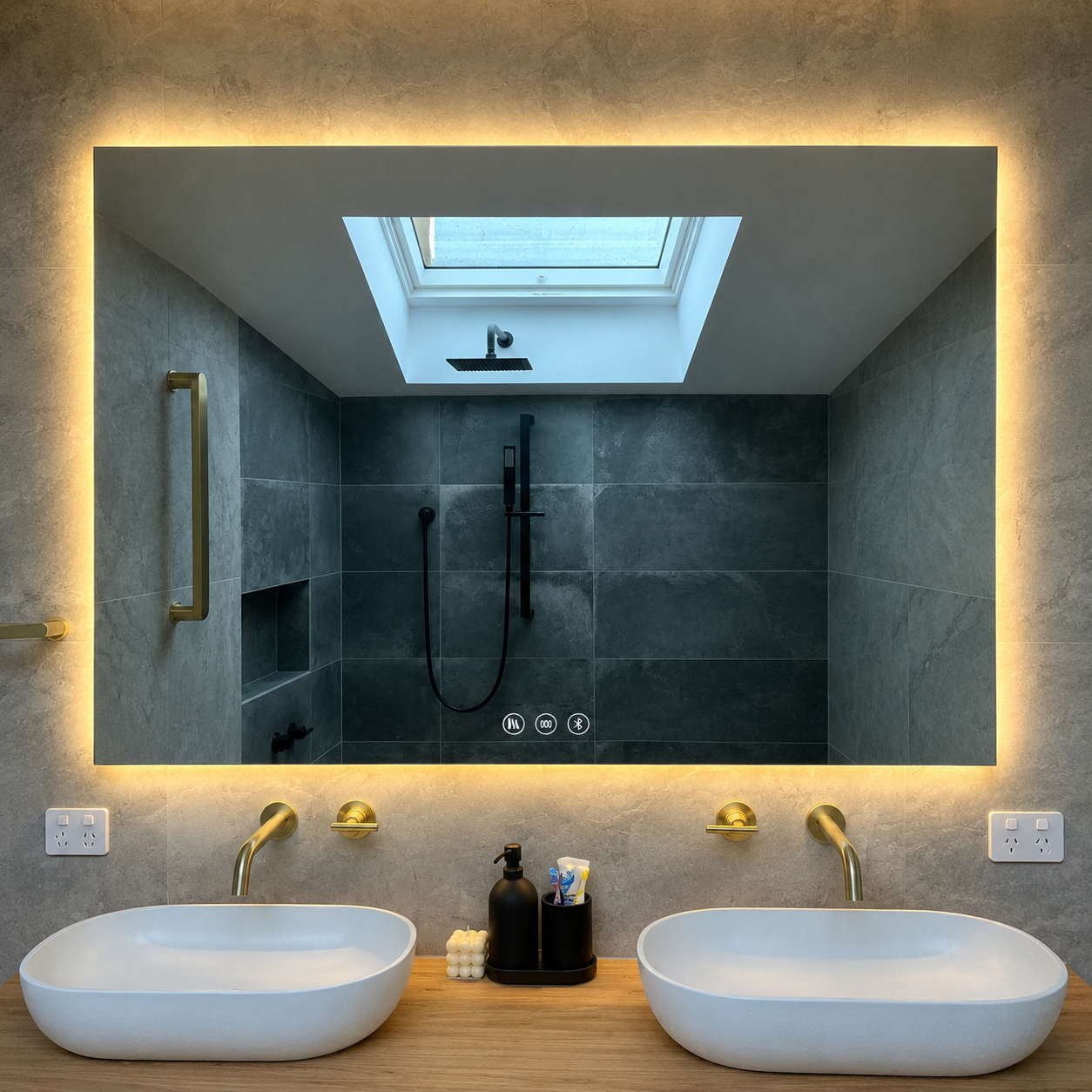
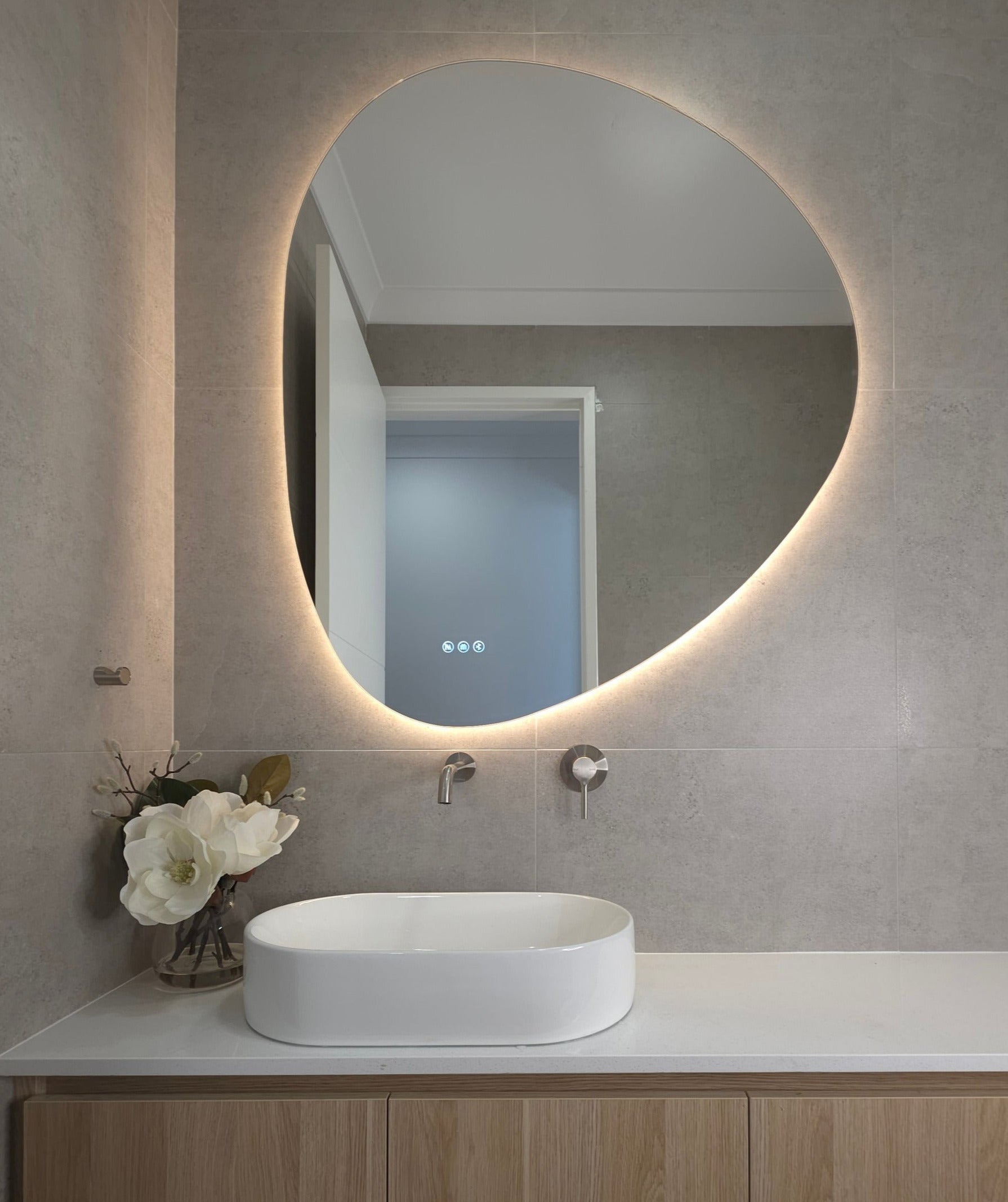
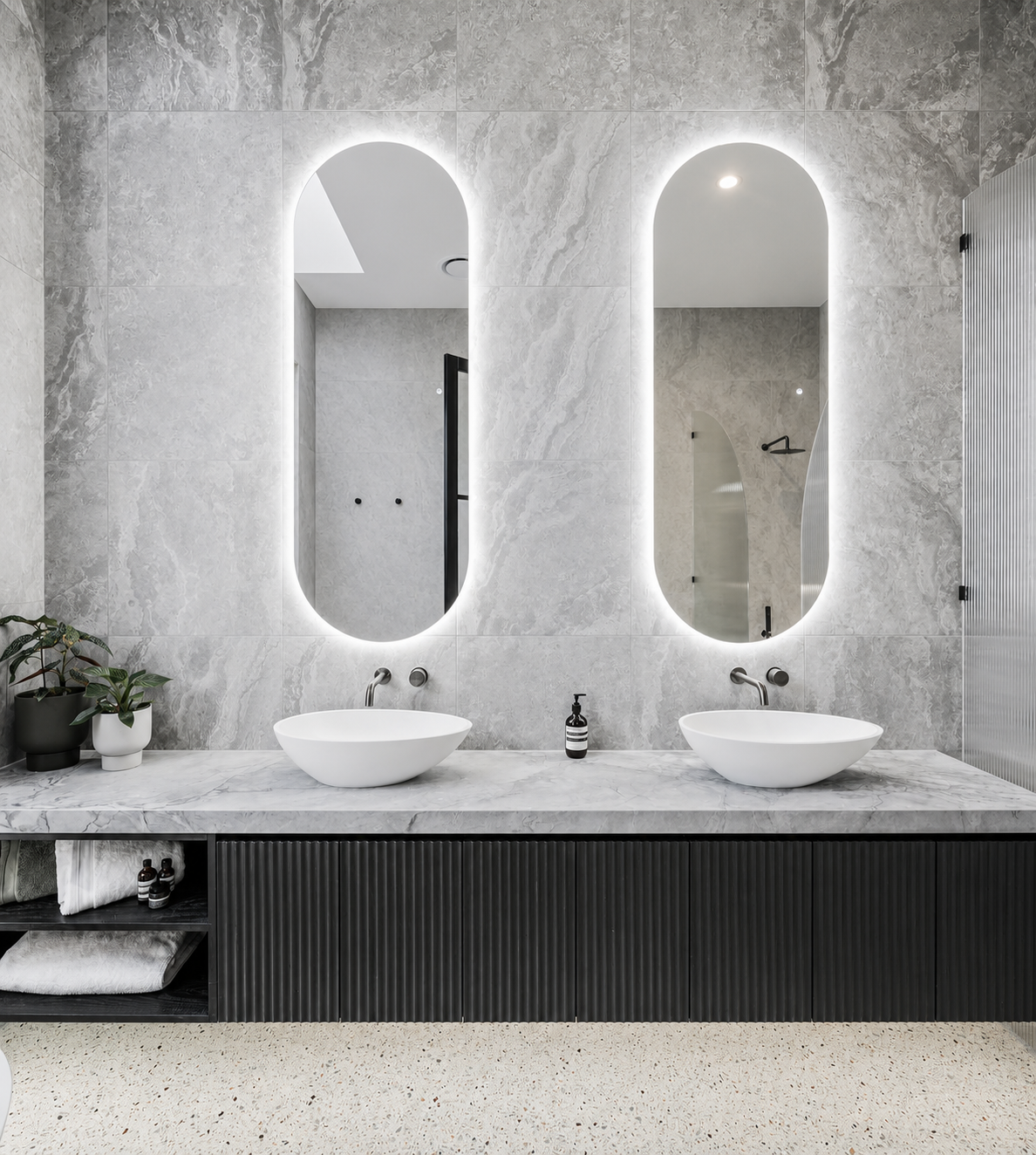
- Backlit adds depth: a soft edge glow makes a wall feel like it extends beyond the mirror.
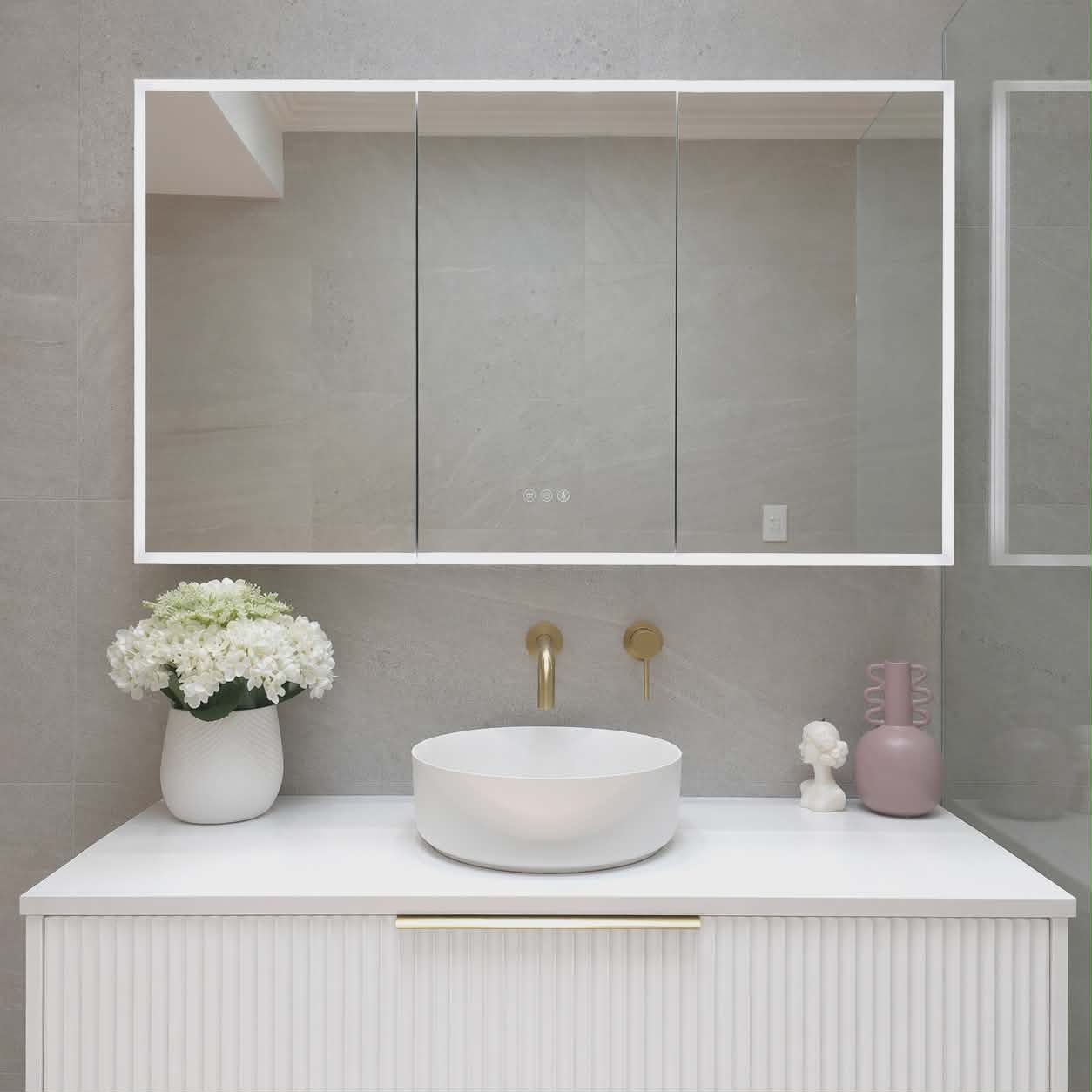
- A mirror cabinet solves two problems at once: reflection and storage, without using extra floor space.
Small Bathroom Mirror Essentials at a Glance
A snapshot before the detail — read on for the reasoning behind each choice.
Why Mirrors Make Small Bathrooms Feel Bigger
A mirror is the only fixture in a bathroom that adds visual space rather than using it. Reflection doubles the perceived depth of whatever it faces — a window, a light fitting, or simply the opposite wall — so positioning matters as much as the mirror itself. A mirror that reflects a genuine source of light or the widest part of the room does far more work than one that reflects a blank tiled wall.
Sight lines matter too. A large mirror positioned to catch the doorway view extends the room the moment you walk in, before you've even registered there's a mirror there at all. And negative space — the visual breathing room around a fixture — reads differently in reflection than in reality; a mirror that reflects clear space rather than clutter makes the whole room feel calmer and larger, even though nothing has physically changed.
Designer Insight: clutter shrinks a small bathroom faster than its actual dimensions ever could. A mirror reflecting a tidy, considered vanity makes the room feel twice as large as the same mirror reflecting bottles and clutter — the mirror doesn't create the effect on its own, what it reflects does.

Choosing the Right Size
The most common mistake in a small bathroom is choosing a small mirror to match it — the opposite is almost always the better call. A mirror close to full vanity width reflects more of the room and more available light than a smaller, centred one, and it's one of the simplest ways to make a compact space feel considered rather than cramped. Avoid the instinct to leave generous wall space either side of a tiny mirror; that space reads as unused rather than restful in a small room. For exact sizing by vanity width, see our companion guide, How to Choose the Right Mirror Size for Your Vanity.
Designer Insight: large mirrors almost always outperform small ones in a small bathroom. It feels counterintuitive to fill a compact wall with a large mirror, but the reflected light and depth it adds consistently outweighs the visual bulk of the mirror itself.
Best Mirror Shapes
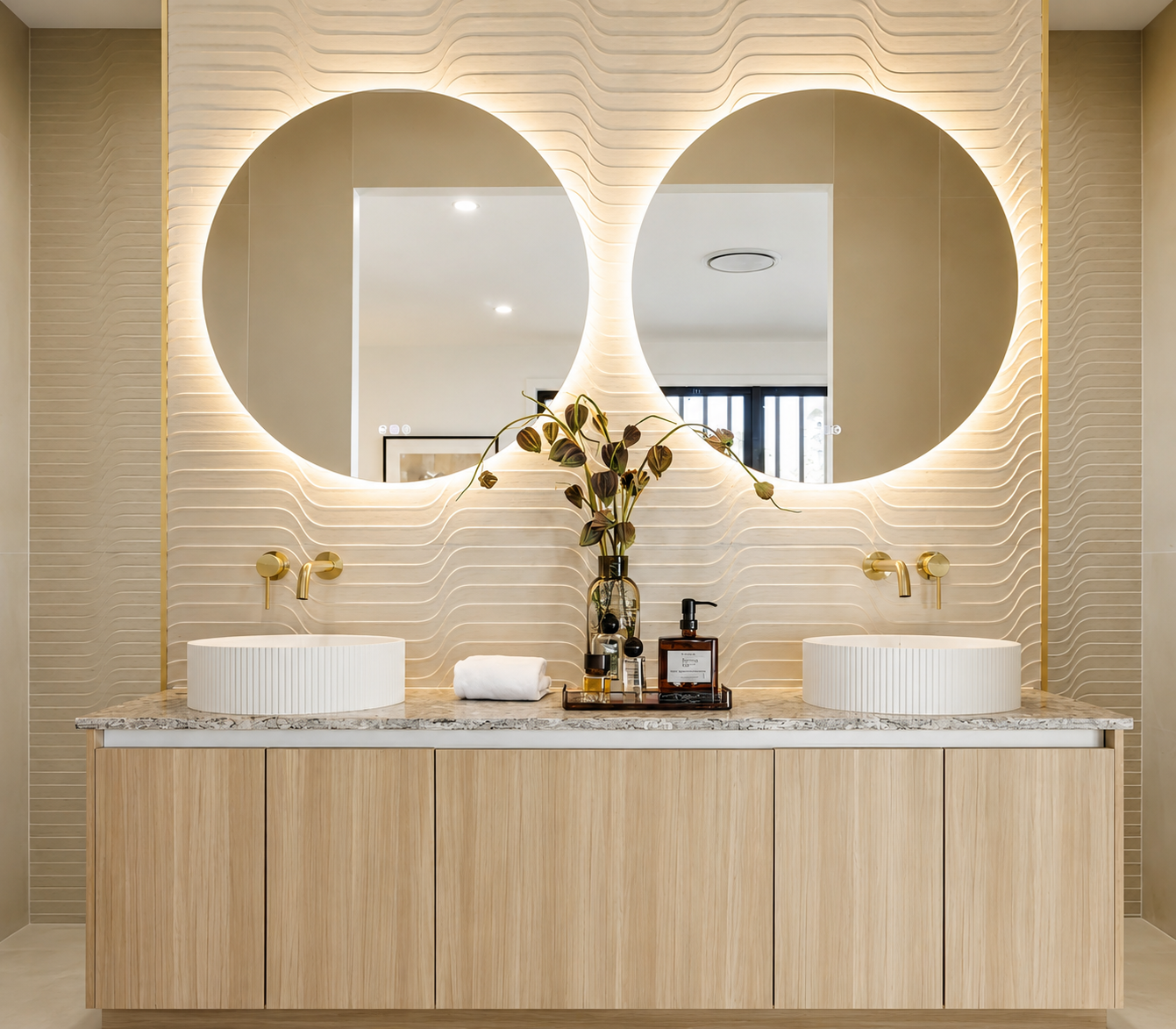
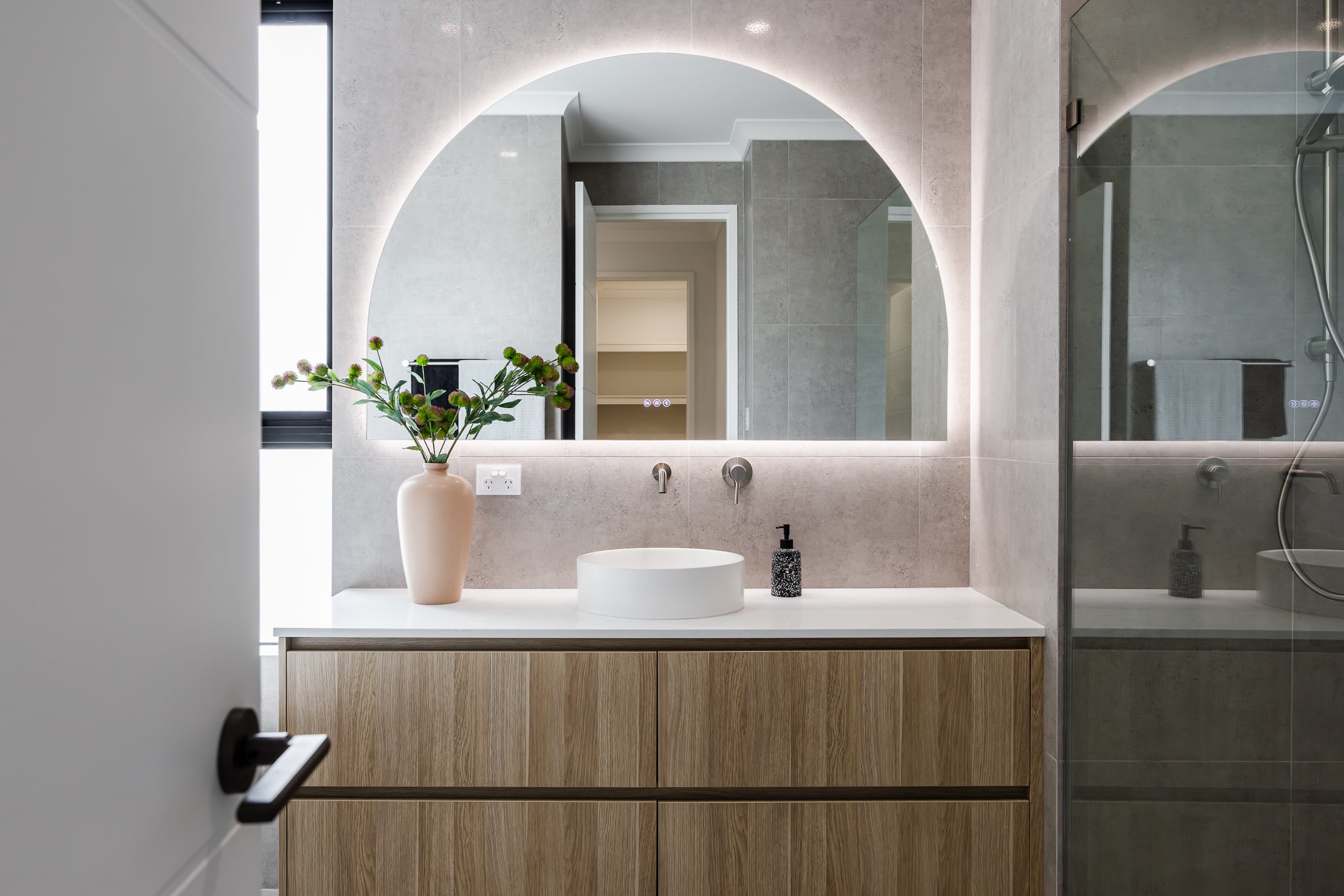
Round mirrors soften a compact room's hard lines and can run close to full vanity width without feeling oversized, since a circle carries less visual width than a rectangle. Arch mirrors add a similar softness while drawing the eye upward, which helps in a small bathroom with a lower ceiling. Rectangle mirrors work well where the vanity is wide relative to the room, since a clean horizontal line reads as calm rather than cramped. Organic shapes can work as a single statement piece, but are worth using sparingly in a small room, since their outline draws more attention than a simpler shape would. For the full breakdown by style and ceiling height, see our companion guide, Round vs Arch vs Rectangle Bathroom Mirrors: Which Shape Is Right?

Frameless vs Framed
A frameless mirror has no visual break between the glass and the wall, which is precisely why it tends to disappear rather than announce itself — in a small bathroom, a mirror that visually disappears leaves more of the room feeling open. A framed mirror adds a defined edge and a stronger sense of visual weight, which can suit a more traditional or Hamptons-style room, but it also reduces how large the mirror reads by drawing a hard boundary around it. In a genuinely compact bathroom, frameless is the safer default; a frame is worth choosing deliberately for its style, not by default.

Designer Insight: frameless mirrors visually disappear, and that's exactly the point in a small bathroom. The less a mirror announces its own edges, the more the wall around it feels like it continues past where the glass actually ends.
Lighting
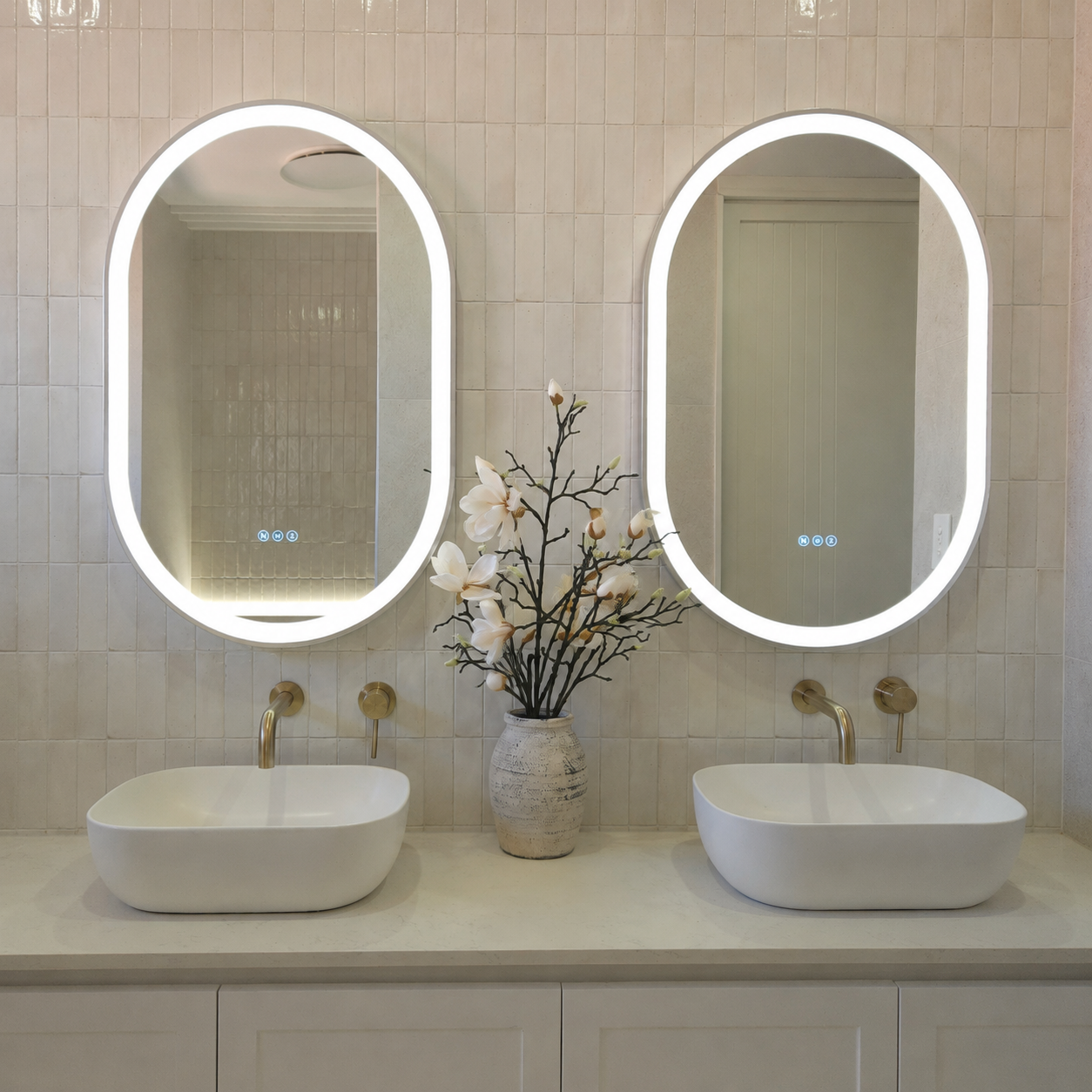
Frontlit lighting gives a small bathroom reliable task light for grooming without depending on a window or ceiling fitting — genuinely useful in an apartment bathroom or windowless powder room with limited natural light. Backlit lighting does more for the sense of space: its soft halo makes the wall around the mirror feel like it extends further than it does, adding a perceived depth a frontlit mirror can't replicate. Where there's little natural light to begin with, prioritise frontlit for usability; where the room already has good natural light, backlit adds atmosphere without sacrificing function. For the full comparison, see our companion guide, Frontlit vs Backlit LED Bathroom Mirrors: Which Lighting Style Is Best?
Designer Insight: backlit lighting makes a wall feel deeper than it is. Because the light source itself stays hidden and only the glow is visible, the eye reads it as light coming from somewhere beyond the mirror, rather than from the mirror itself — a small but genuine trick for a compact room.
Mirror Cabinets for Small Bathrooms
A mirror cabinet solves two of a small bathroom's most common problems in a single fixture: it provides genuine storage without using any extra floor space, and it removes the loose bottles and clutter from the benchtop that make a small room feel busier than it is. Visual simplicity matters more in a compact bathroom than a large one, and a cabinet that clears the vanity does more for that simplicity than almost any other single change. For the full reasoning on choosing between a cabinet and a decorative mirror, see our companion guide, Mirror Cabinet or Bathroom Mirror?

Colour & Materials
A frameless mirror or a slim-profile cabinet pairs cleanly with almost any material palette, but a few combinations consistently work well in small bathrooms. Against all-white tiling, a mirror with a soft glow adds warmth without introducing another hard surface. Against stone benchtops, a simple frameless edge lets the stone's natural pattern stay the visual focus rather than competing with a busy frame. Timber vanities pair well with a warmer light setting, echoing the timber's own tone rather than fighting it with a stark cool light.
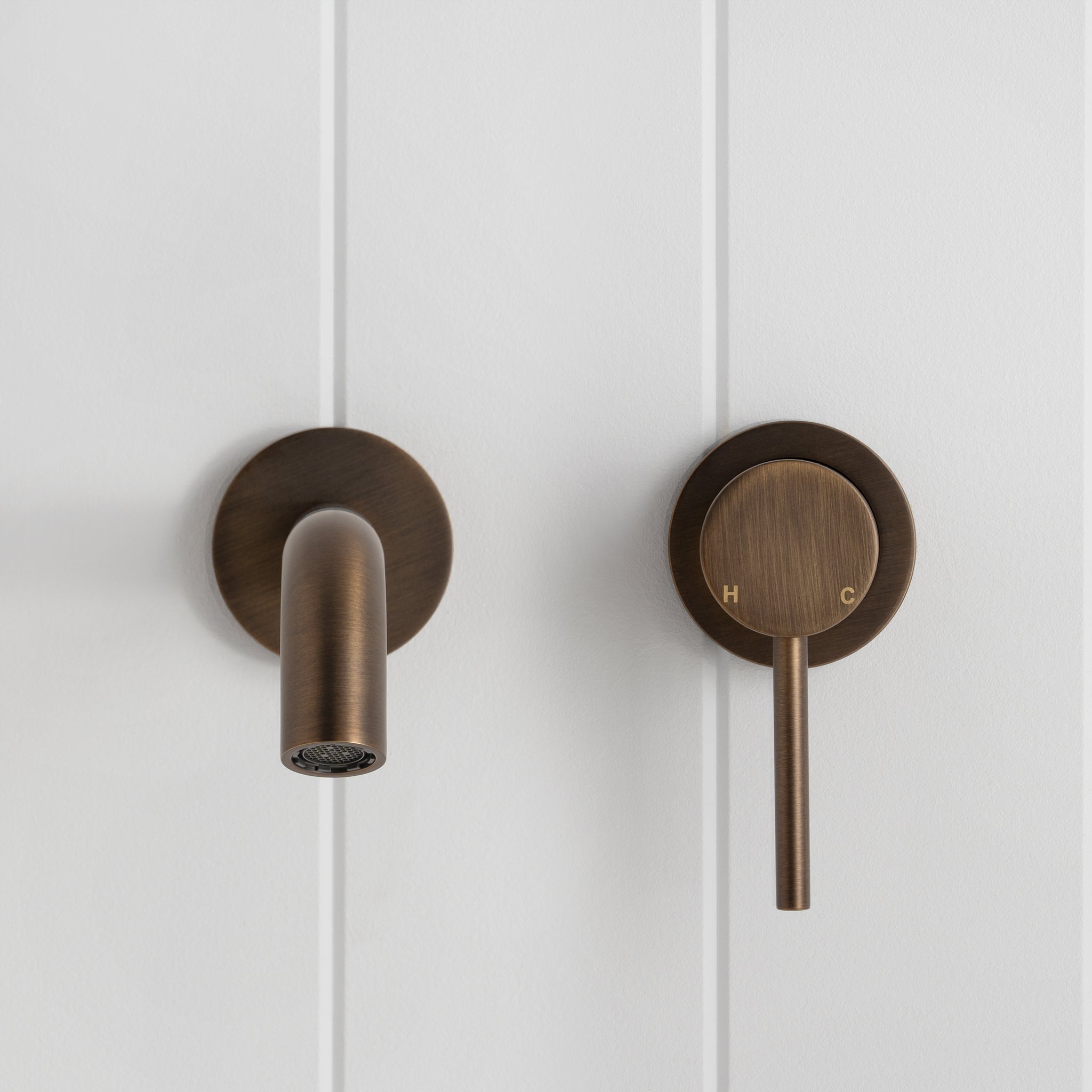
Tapware and hardware finish should guide the mirror's frame or trim colour where one exists — black tapware suits a black-framed or frameless mirror with a dark trim detail, while brushed brass or antique brass tapware pairs naturally with a warmer, gold-toned frame. Where the room already has a natural texture, such as timber or a textured tile, a simpler mirror shape keeps the balance in the room's favour rather than adding a second competing texture.

Mirrors for Different Small Spaces
Not every small bathroom has the same constraints, and the right mirror shifts slightly with the room type.
| Space | Best Approach |
|---|---|
| Powder room | Round or arch, near full vanity width, backlit for atmosphere |
| Apartment bathroom | Frameless, frontlit or combined, cabinet if storage is tight |
| Ensuite | Arch or rectangle, sized to the vanity, combined lighting |
| Narrow bathroom | Vertical rectangle or round, positioned to reflect the room's longest sightline |
| Guest bathroom | Simple, frameless shape and reliable frontlit task lighting |

Common Mistakes
- Mirror too small: the single most common mistake — a small mirror in a small room shrinks it further rather than opening it up.
- Heavy frame: a bulky frame adds visual weight the room can't spare.
- Dark or flat lighting: a dim or single-tone mirror does nothing to add the depth a small room benefits from.
- Wrong height: a mirror mounted too high or low disconnects from the vanity and disrupts the room's proportions.
- Ignoring storage: choosing a decorative mirror in a bathroom that genuinely needed the storage a cabinet would have provided.
- Too many accessories: cluttering the benchtop undoes the sense of space a well-chosen mirror just created.

Expert Designer Recommendations
Designer's Rules
- Size up before you size down — a larger mirror is almost always the better call in a small room.
- Default to frameless unless the style genuinely calls for a frame.
- Position the mirror to reflect light or the widest sightline, not a blank wall.
- Choose a cabinet over a decorative mirror the moment storage becomes tight.
Comparison Tables
Mirror Size
| Vanity Width | Recommended Mirror Width |
|---|---|
| 600mm | 500–600mm |
| 750mm | 650–760mm |
Mirror Shape
| Shape | Best For Small Bathrooms |
|---|---|
| Round | Powder rooms, softening hard lines |
| Arch | Lower ceilings, ensuites |
| Rectangle | Wider vanities, narrow bathrooms |
Lighting
| Room Condition | Best Lighting |
|---|---|
| Windowless | Frontlit |
| Naturally lit | Backlit |
Framed vs Frameless
| Style | Effect in a Small Bathroom |
|---|---|
| Frameless | Visually disappears, room feels larger |
| Framed | Adds visual weight, suits traditional styles deliberately |
Bathroom Type
See the full breakdown by space type in the section above.
Frequently Asked Questions
What mirror makes a bathroom look bigger?
A frameless mirror close to full vanity width, positioned to reflect natural light or the room's widest sightline, does the most to make a small bathroom feel larger.
Should a small bathroom have a large mirror?
Yes — counterintuitively, a larger mirror almost always outperforms a small one in a compact room, provided it's sized to the vanity rather than the whole wall.
Round or rectangle for a small bathroom?
Round generally works best in the smallest spaces, since it can run close to full vanity width without feeling oversized. Rectangle suits a slightly wider vanity or a narrow bathroom needing a strong horizontal or vertical line.
Frameless or framed for a small bathroom?
Frameless is the safer default, since it reads as larger and less visually heavy. Framed can still work if the style calls for it, but choose it deliberately.
Can mirror cabinets work in small bathrooms?
Very well — a cabinet solves storage and clutter in one fixture without using any extra floor space, which matters more in a small room than a large one.
Should a small bathroom mirror reach the ceiling?
Generally, no. A small gap above the mirror still looks more considered than one pushed to the ceiling, even in a compact room.
Designer's Cheat Sheet
Designer's Cheat Sheet
- ✔ Want the room to feel bigger? → Go larger, not smaller
- ✔ Want it to feel open? → Frameless
- ✔ Want more perceived depth? → Backlit
- ✔ Short on storage? → Mirror cabinet
- ✔ Not sure where to start? → Round or arch, near full vanity width
Conclusion
Small bathrooms benefit from thoughtful mirror selection more than almost any other fixture in the room. Go larger rather than smaller, choose frameless over framed by default, let backlit lighting add the depth a small wall needs, and use a cabinet the moment storage becomes tight. None of these choices cost more floor space — they simply use the space that's already there more intelligently.
Ready to see these principles in real mirrors? Explore our complete Smart Mirrors and Mirror Cabinets collections, or browse our Best Sellers if you're not sure where to start.
Where To Next?
- Start here: The Ultimate Bathroom Mirror Buying Guide
- Related guides: How to Choose the Right Mirror Size for Your Vanity, Round vs Arch vs Rectangle Bathroom Mirrors: Which Shape Is Right?, How High Should You Hang a Bathroom Mirror?, Frontlit vs Backlit LED Bathroom Mirrors, LED Mirror Features Explained and Mirror Cabinet or Bathroom Mirror?
- Browse: the full Smart Mirrors range
- Need storage: the full Mirror Cabinets range
- Not sure where to start: our Best Sellers


