








How To Choose The Perfect Mirror Size For Any Bathroom Vanity
Mirror size is one of the most important decisions in bathroom design — yet it’s often overlooked until the final stages of a renovation.
The right mirror can completely transform how spacious, balanced and luxurious a bathroom feels.
The wrong mirror can make even beautifully designed bathrooms feel visually awkward or undersized.
This is because mirrors do far more than provide reflection. They influence:
- proportion
- lighting
- symmetry
- openness
- atmosphere
In luxury bathroom design, mirror sizing is treated architecturally.
And often, the mirror becomes one of the defining features of the entire room.

Why Mirror Size Changes The Entire Bathroom
Bathrooms feel most luxurious when proportions feel balanced.
Designers carefully consider how mirrors interact with:
- vanity width
- ceiling height
- wall spacing
- lighting
- tapware
- surrounding materials
A mirror that is too small can make a vanity feel disconnected and visually underwhelming.
A mirror that is too large can overwhelm the room if proportions are ignored.
The goal is creating visual harmony.
The General Bathroom Mirror Sizing Rule
As a general guideline, bathroom mirrors should typically be:
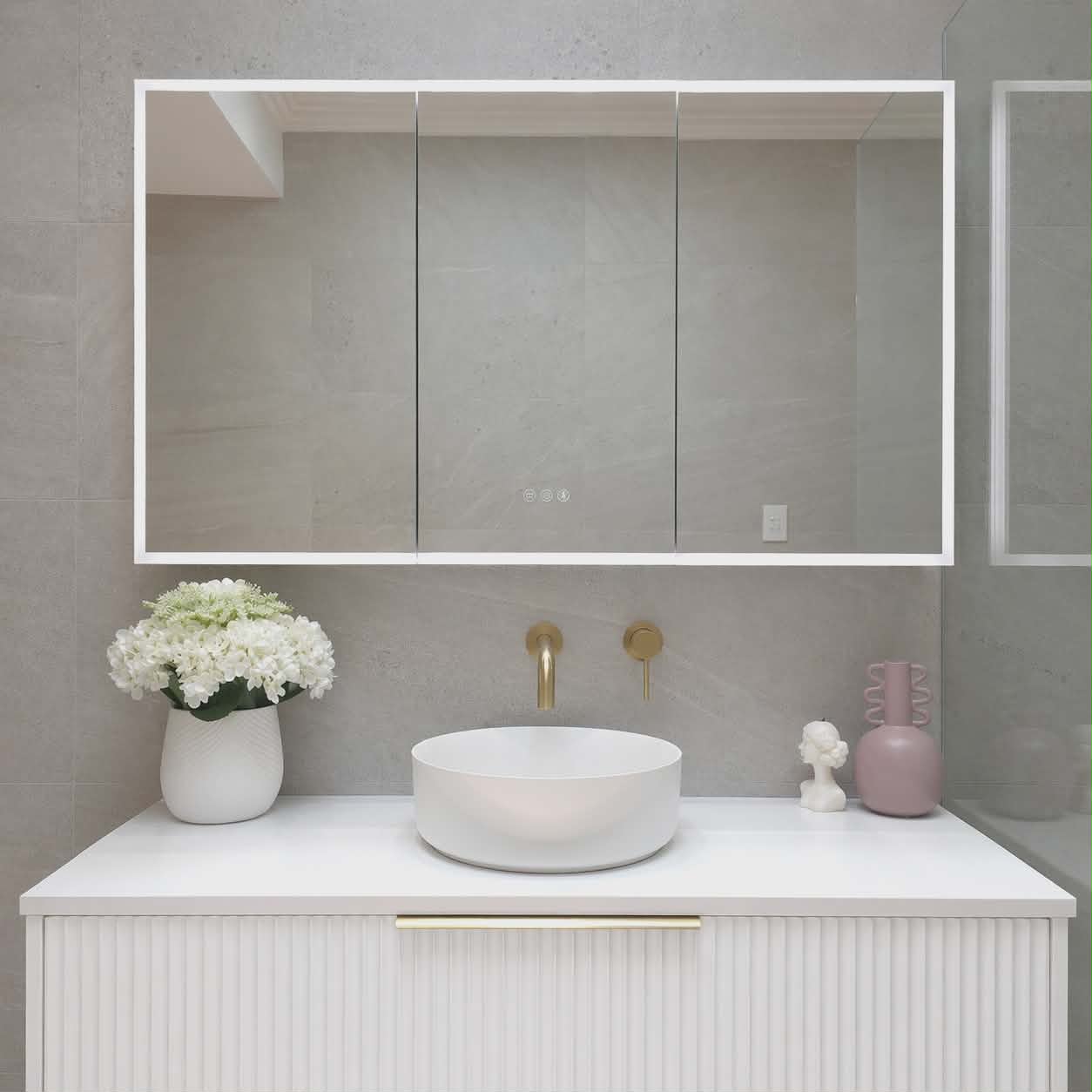
- slightly narrower than the vanity
- visually centred
- proportionate to surrounding lighting and tapware
Most designers recommend mirrors sit approximately:
- 70–90% of the vanity width
This creates a cleaner and more intentional appearance.
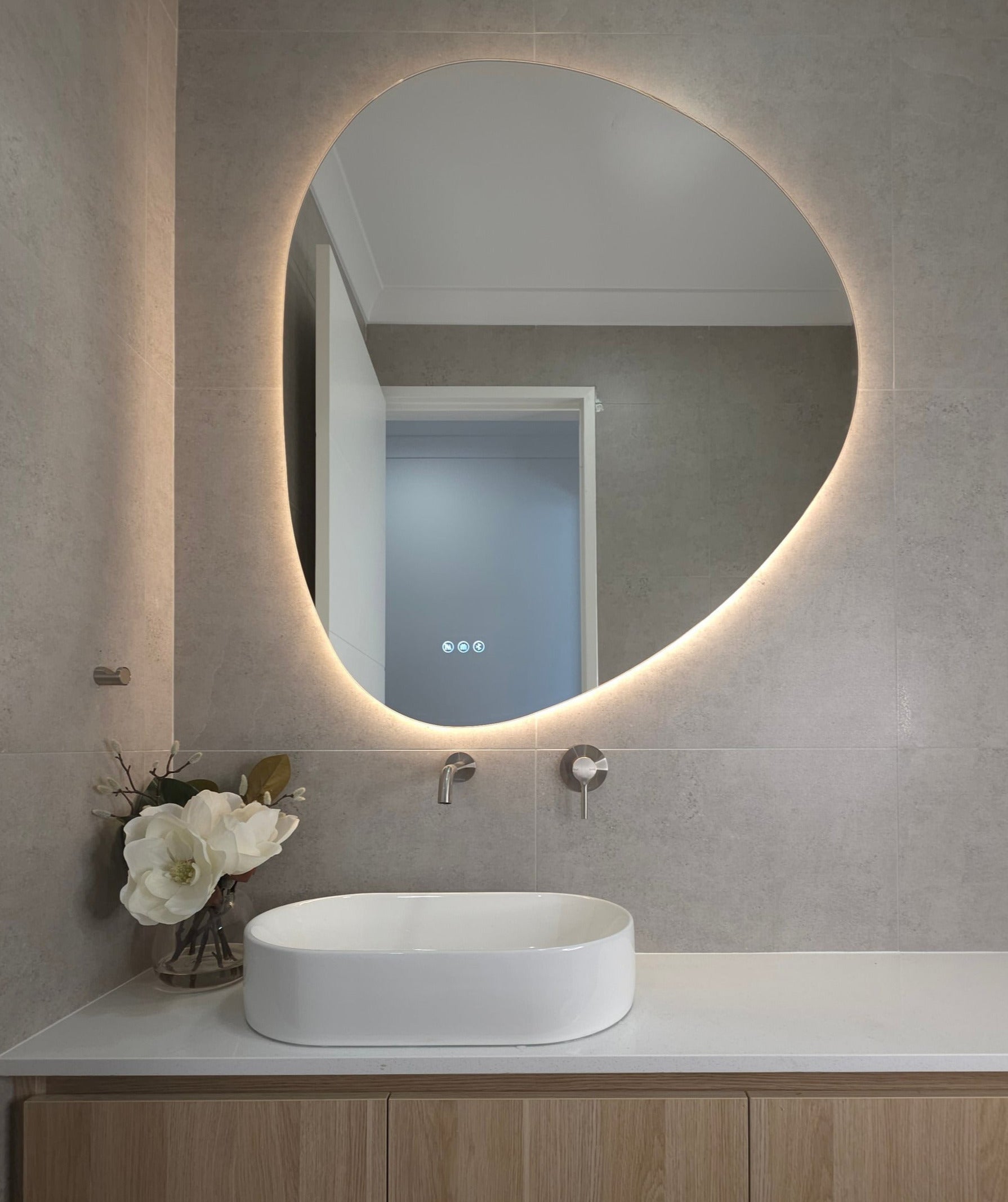
Oversized mirrors have also become increasingly popular in modern Australian bathrooms because they:
- reflect more light
- increase visual openness
- create stronger architectural impact
particularly in minimalist spaces.
Recommended Mirror Sizes By Vanity Width
| Vanity Width | Recommended Mirror Width | Designer Effect |
|---|---|---|
| 600mm Vanity | 500–600mm mirror | Balanced and compact |
| 750mm Vanity | 600–700mm mirror | Clean modern proportion |
| 900mm Vanity | 700–800mm mirror | Luxury hotel-style feel |
| 1200mm Vanity | 900–1100mm mirror | Strong architectural presence |
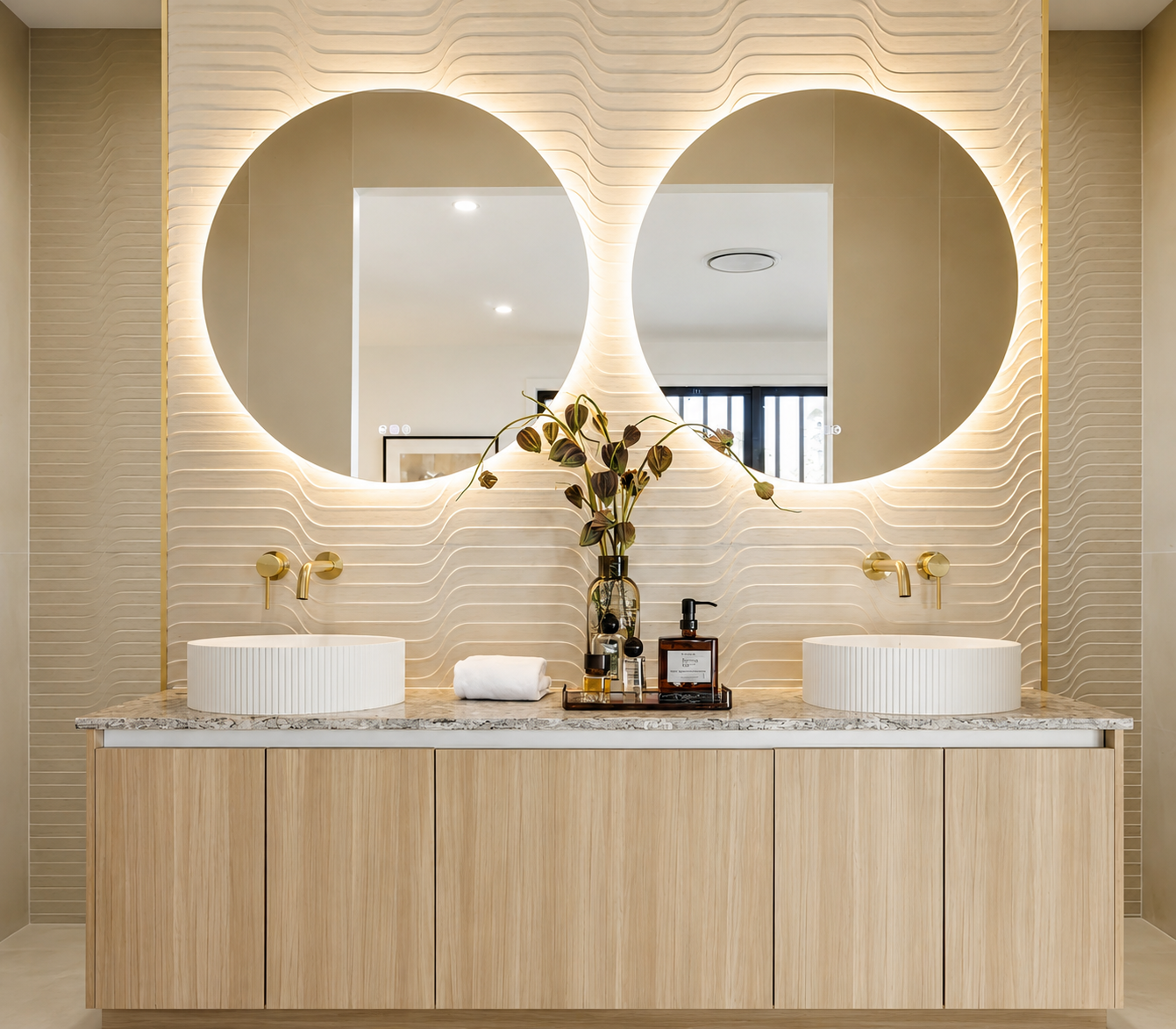
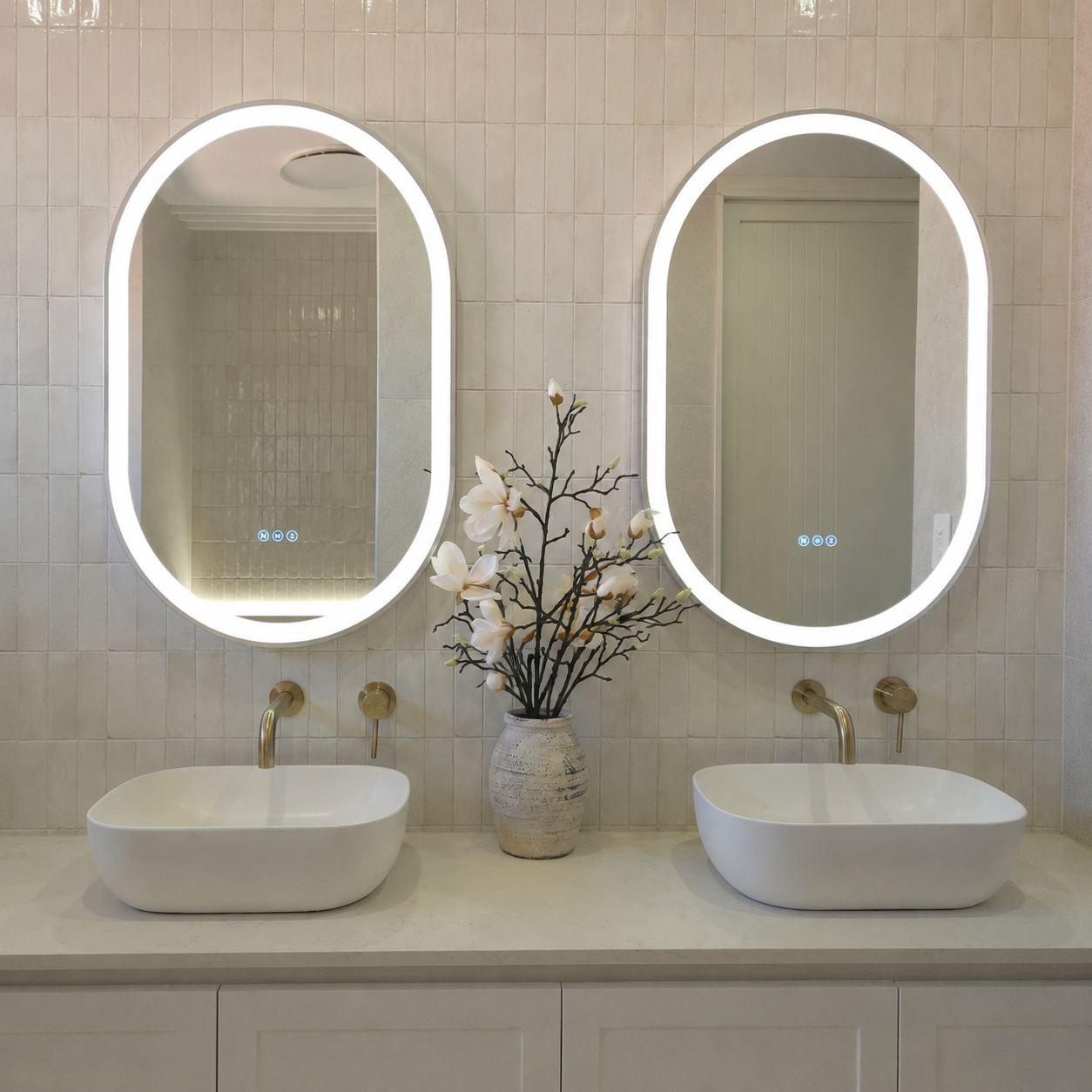
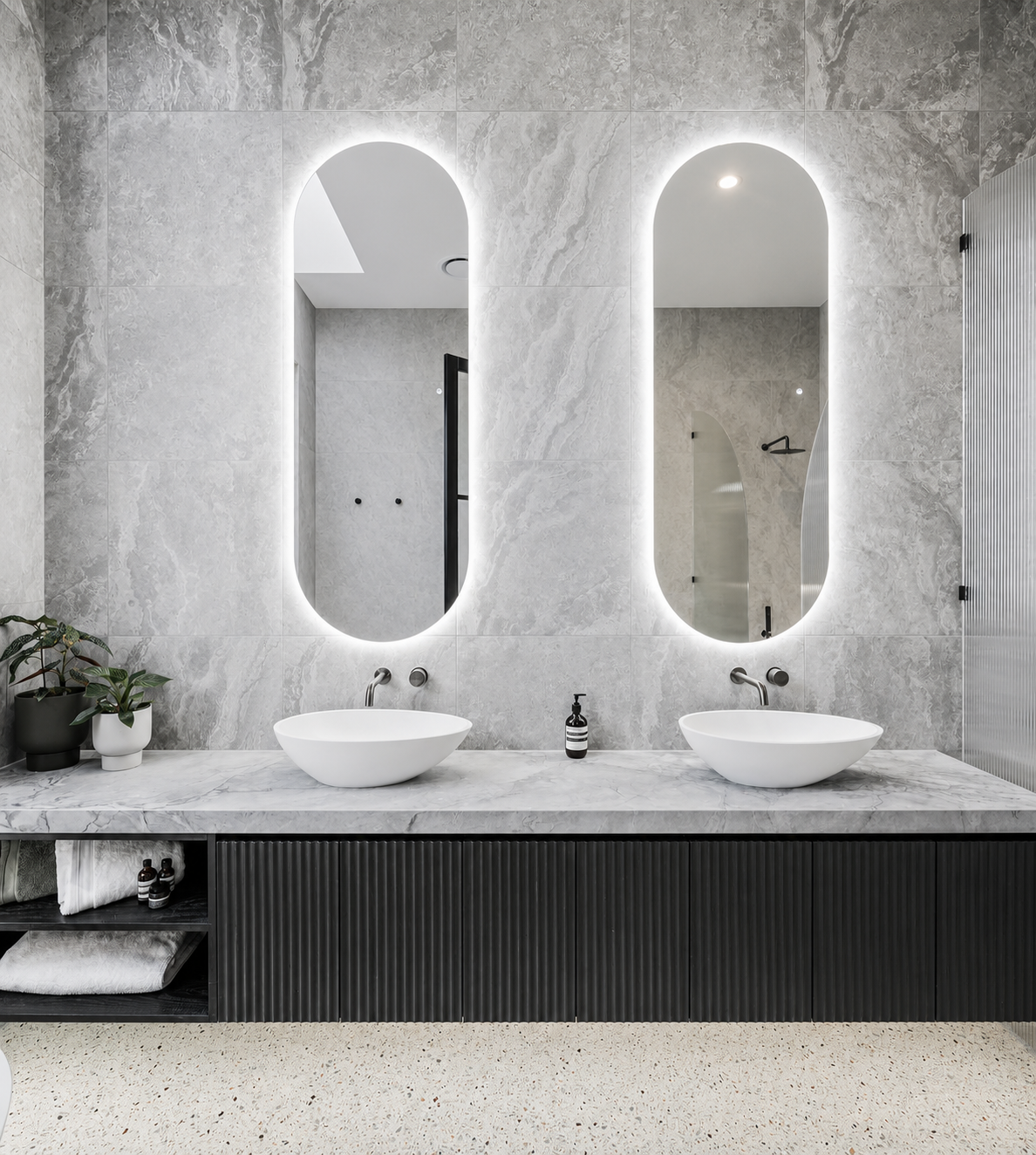
| Double Vanity | Two mirrors or oversized feature mirror | Symmetry and openness |
Oversized Mirrors Feel More Luxurious
One of the most common features in premium bathrooms is larger mirror proportions.
Luxury bathrooms rarely use undersized mirrors.
Instead, designers often choose:
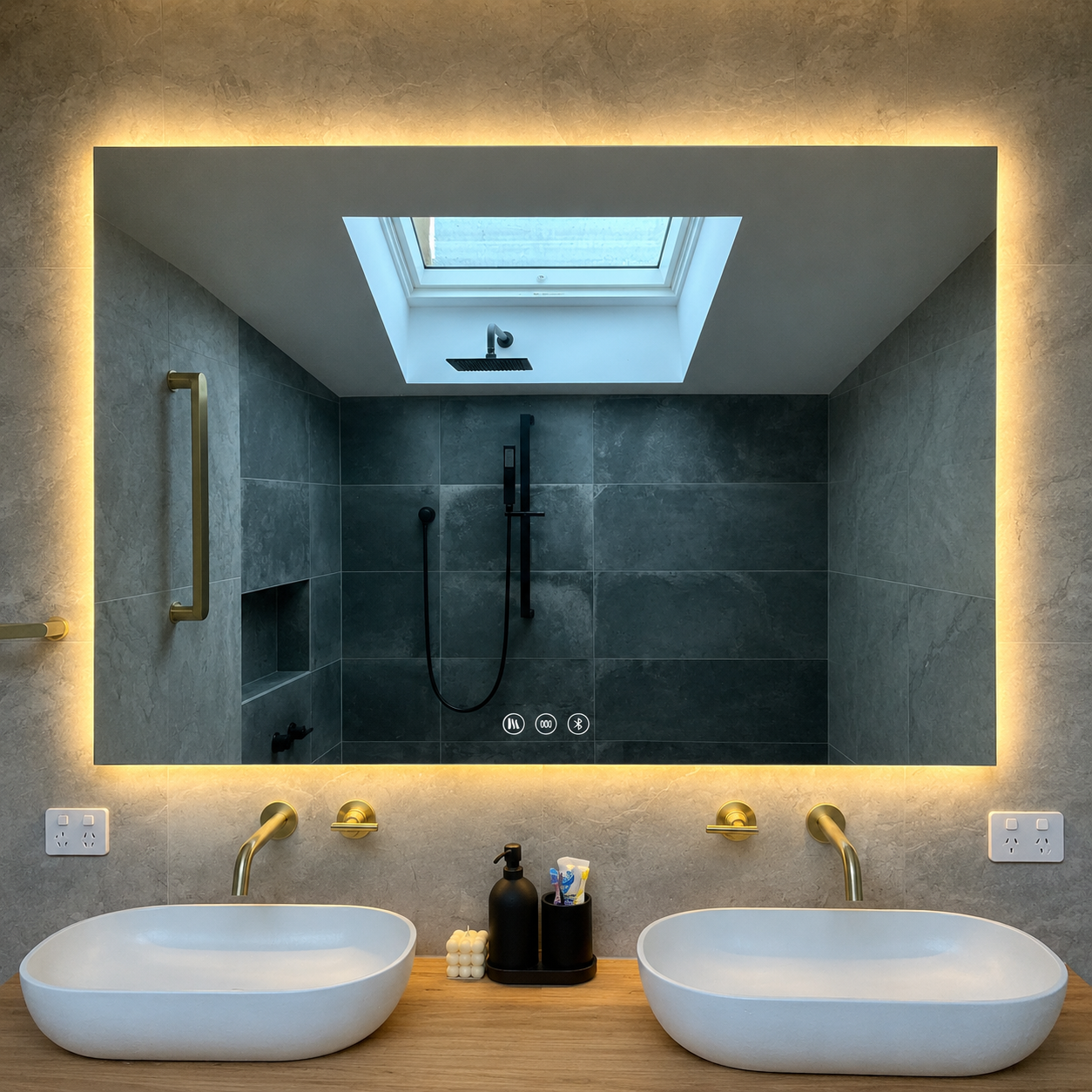
- oversized frameless mirrors
- full-width vanity mirrors
- illuminated feature mirrors
- larger vertical proportions
because they create:
- openness
- visual calmness
- cleaner lines
- stronger light reflection
Oversized mirrors also help bathrooms feel significantly more expensive without requiring major renovation changes.


Round Mirrors Require Different Sizing Logic
Round mirrors create a softer visual effect compared to rectangular mirrors.
Because of their shape, they are often sized slightly differently.
For most vanities:
- the mirror should feel visually substantial
- without appearing too small against the vanity width
Round mirrors work especially well in:
- minimalist bathrooms
- contemporary coastal interiors
- organic modern spaces
They help soften:
- tiled surfaces
- sharp cabinetry
- linear tapware
The Amalfi Round LED Mirror is a strong example of how larger round mirrors can create softness while still maintaining architectural presence.
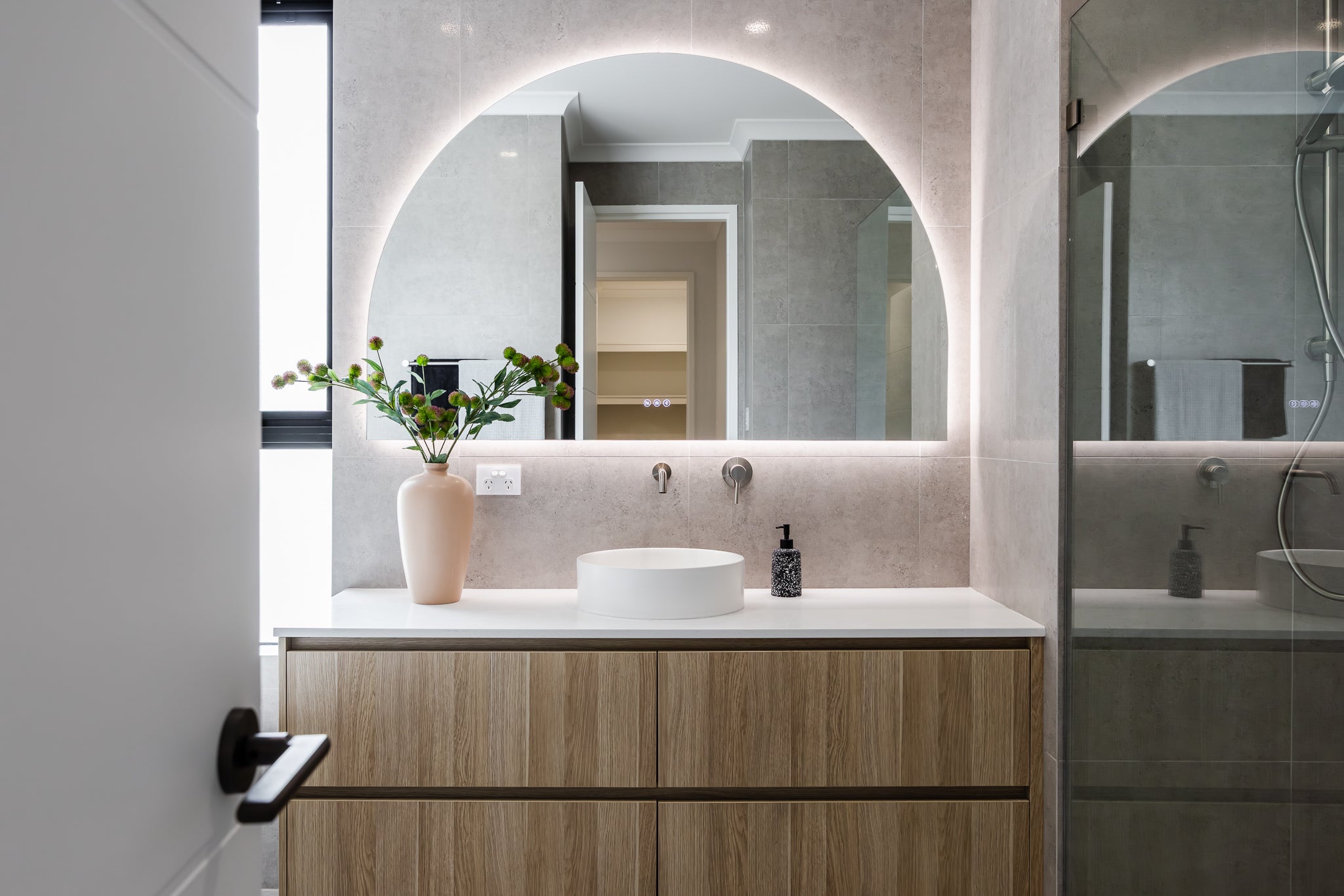
Arch Mirrors Create Height And Elegance
Arch mirrors naturally draw the eye upward.
This creates:
- visual height
- elegance
- softer vertical flow
which makes them particularly effective in:
- smaller bathrooms
- ensuites
- bathrooms with lower ceilings
Arch mirrors often feel more custom and designer-led than standard rectangular mirrors.
The Positano Arch LED Mirror, for example, combines softer curves with integrated lighting and anti-fog technology for a more elevated bathroom experience.

Frameless Mirrors Create Cleaner Proportions
Frameless mirrors reduce visual interruption.
This allows the mirror itself to integrate more naturally into the room.
The result feels:
- cleaner
- more minimal
- more spacious
- more architectural
Frameless mirrors are particularly effective in:
- modern bathrooms
- luxury ensuites
- compact bathrooms
- minimalist interiors
because they allow surrounding materials and lighting to remain visually dominant.
Double Vanity Mirror Sizing
Double vanities typically use one of two approaches:
Two Individual Mirrors
This creates:
- symmetry
- separation
- softer visual balance
especially when using:
- round mirrors
- arch mirrors
One Oversized Mirror
This creates:
- stronger openness
- modern minimalism
- cleaner architectural lines
particularly in contemporary bathrooms.
The best option depends on:
- vanity style
- wall width
- lighting placement
- overall bathroom aesthetic
The Most Common Bathroom Mirror Sizing Mistakes
Even premium bathrooms can feel visually unbalanced when mirror proportions are incorrect.
Choosing Mirrors That Are Too Small
This is the most common mistake.
Undersized mirrors make vanities feel disconnected and visually incomplete.
Ignoring Vertical Proportion
Mirror height matters just as much as width.
Prioritising Trends Over Scale
The mirror should suit the room — not just current trends.
Forgetting Lighting Interaction
Mirror size directly influences how light reflects throughout the bathroom.
Overcrowding Double Vanities
Too many visual elements can reduce calmness and symmetry.

Mirrors Shape The Atmosphere Of A Bathroom
Luxury bathrooms are rarely defined by expensive materials alone.
They feel premium because proportions feel intentional.
Mirrors influence:
- how light moves through the room
- how spacious the bathroom feels
- how balanced the vanity appears
- how calm the overall space feels
This is why choosing the correct mirror size matters so much more than most people realise.
Explore Bathroom Mirrors Collection
Final Thoughts
The perfect bathroom mirror is not simply about reflection.
It’s about proportion, atmosphere and balance.
When sized correctly, a mirror can completely transform how spacious, luxurious and architectural a bathroom feels.
Whether you prefer oversized frameless mirrors, softer round silhouettes or elegant arch designs, the key is choosing proportions that feel intentional within the space.
Because in modern bathroom design, the mirror is rarely just a finishing touch — it often becomes the feature itself.
FAQ SECTION
What size mirror should I choose for my bathroom vanity?
Most bathroom mirrors should be approximately 70–90% of the vanity width for balanced proportions.
Should a bathroom mirror be wider than the vanity?
Typically no. Most designers recommend mirrors remain slightly narrower than the vanity for a cleaner appearance.
Are oversized bathroom mirrors in style?
Yes. Oversized mirrors are increasingly popular in luxury bathrooms because they create openness and stronger architectural impact.
Are round mirrors good for bathroom vanities?
Yes. Round mirrors soften hard lines and work especially well in minimalist and modern bathrooms.
What is the best mirror shape for a small bathroom?
Round and arch mirrors often work particularly well in smaller bathrooms because they soften the space visually and improve perceived openness.


