


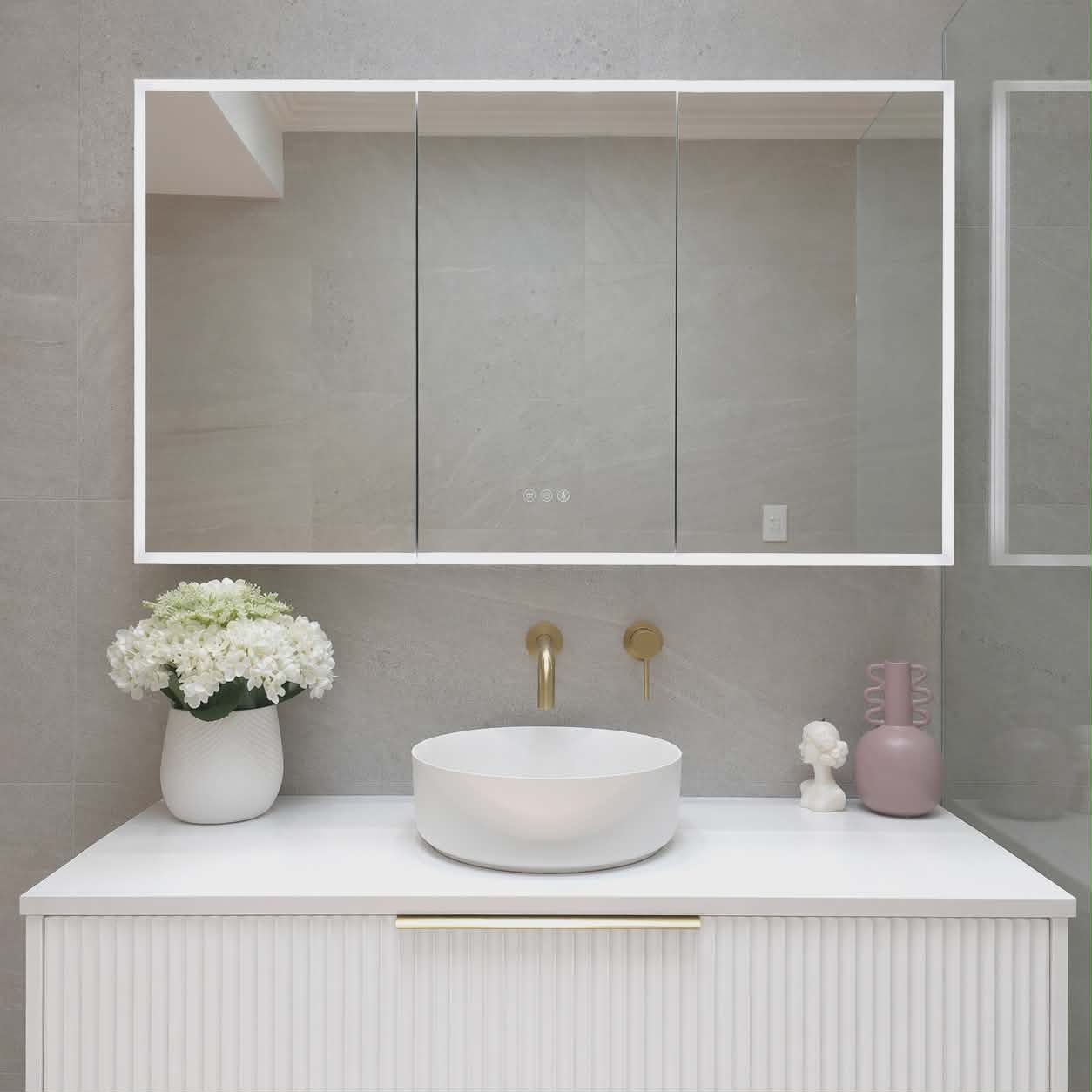

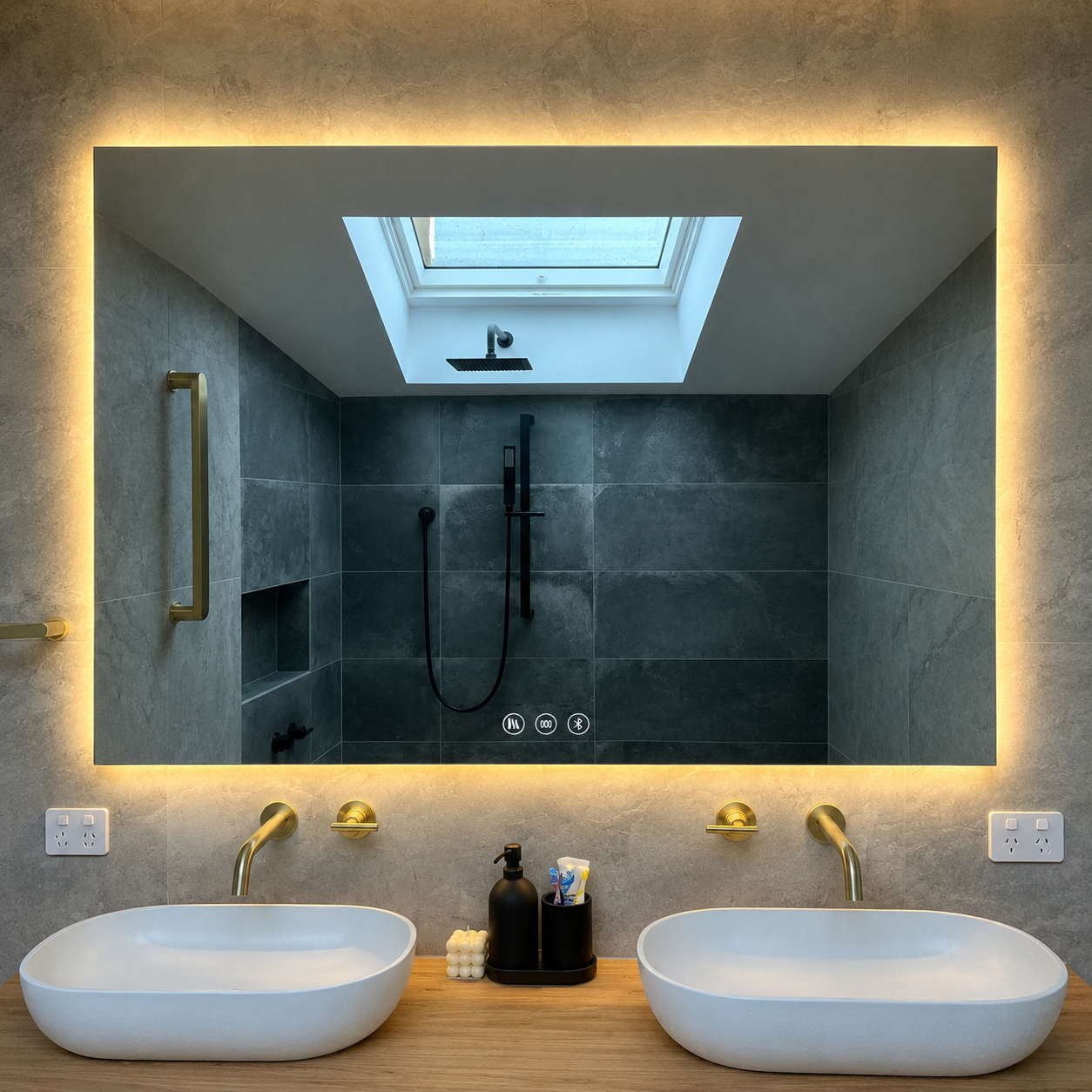
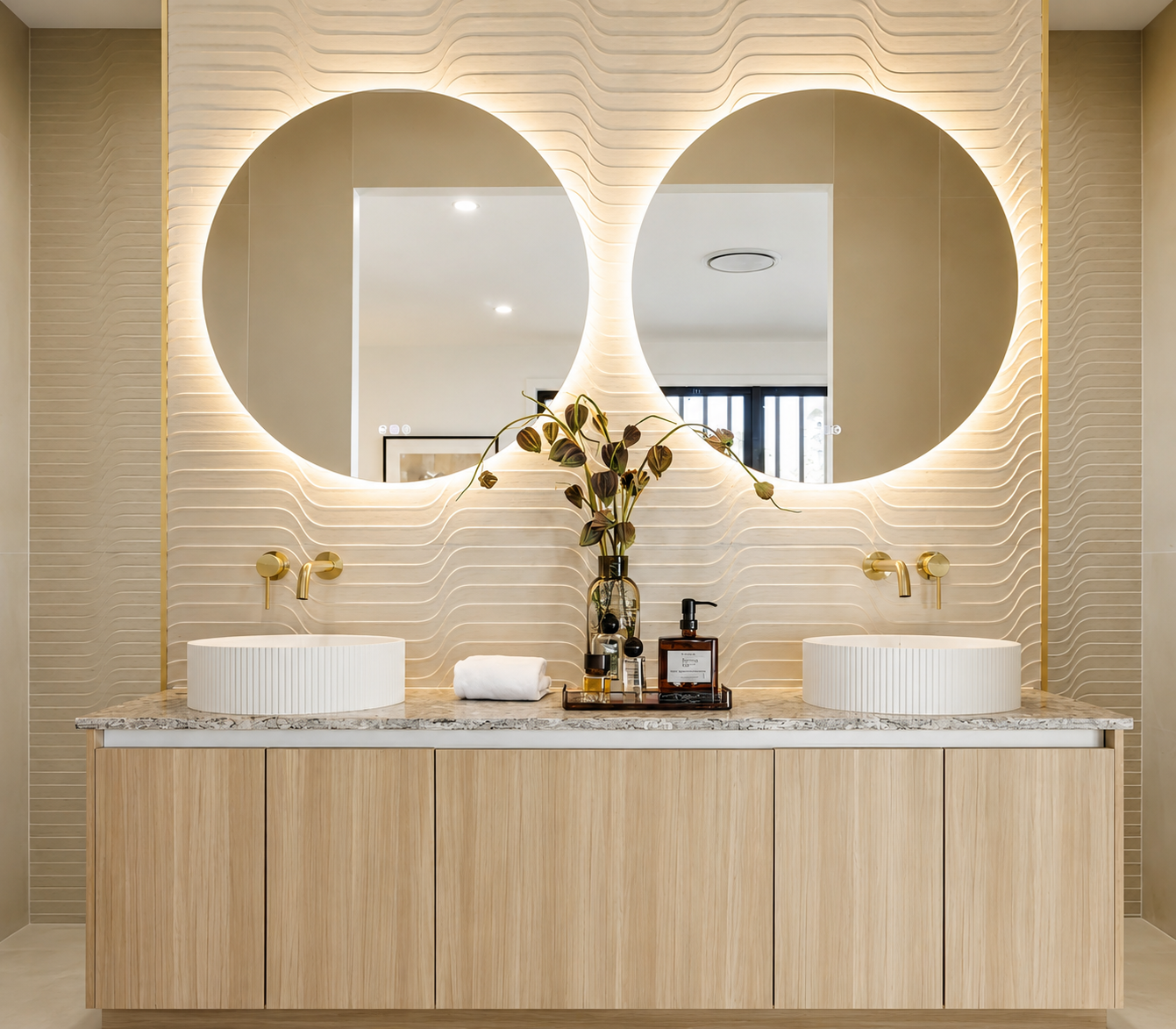
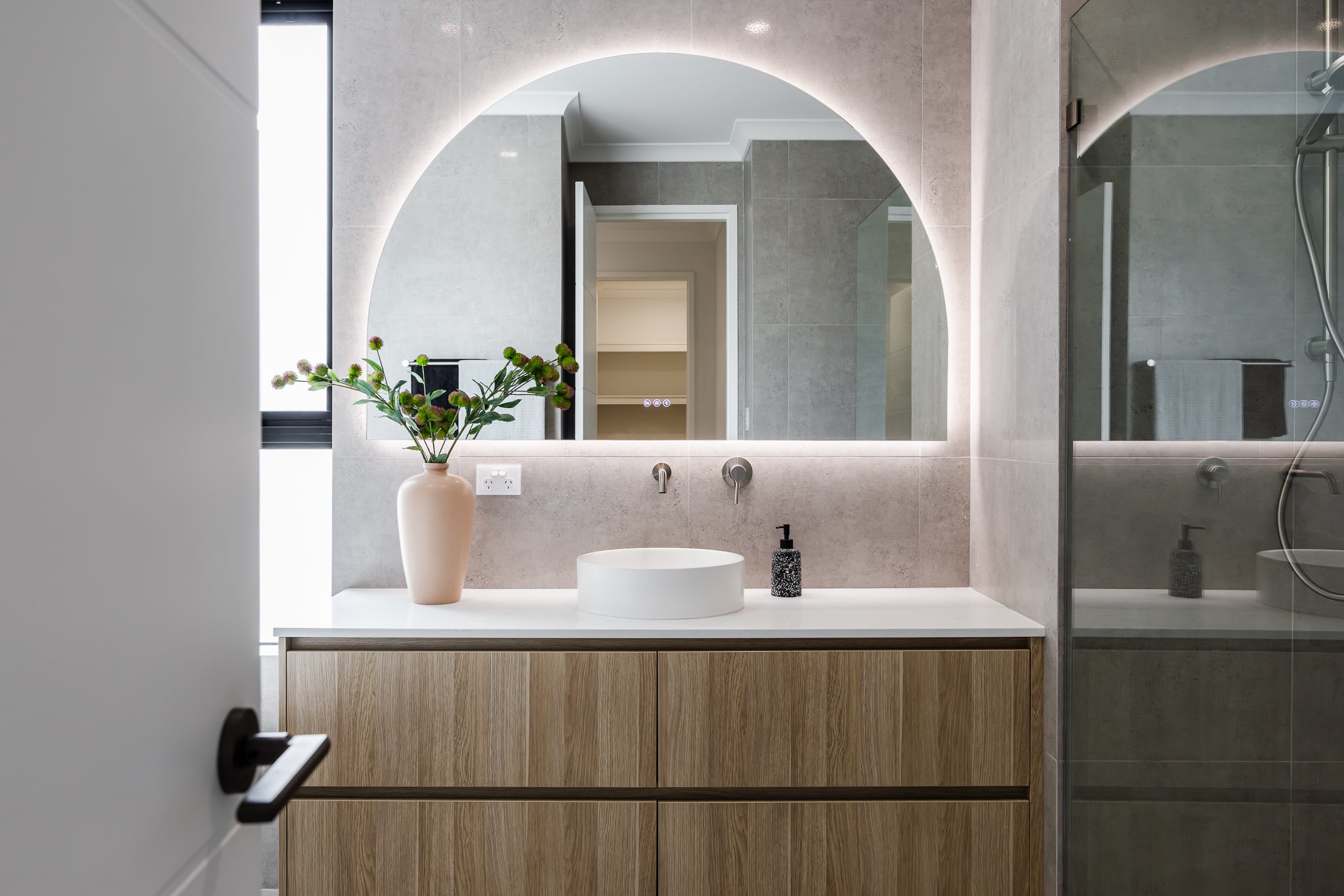





The vanity is often the true centrepiece of a bathroom — the fixture every other decision tends to follow. Choose it first, and the right mirror size, lighting style and tapware finish become far easier decisions. Choose it last, or without a plan, and it's common to end up with a mirror that doesn't fit, tapware at the wrong height, or storage that never quite suits the household.
This guide walks through everything worth knowing before buying a vanity — size, installation type, material, and how it sets up every decision that follows, from mirror to lighting to tapware. Whether you're planning a full bathroom renovation or simply replacing a tired vanity, the same underlying principles apply.
13 min read • Last reviewed: 23 July 2026 • Written by the InVogue Mirrors & Bathware Team
Why Trust InVogue Mirrors & Bathware? InVogue is an Australian retailer trusted in over 20,000 homes, specialising in LED bathroom mirrors, mirror cabinets and tapware. The planning guidance in this article reflects how these fixtures work together in real Australian renovations.
Quick Answer
- Choose the vanity first — its width sets the ideal mirror size and shapes the rest of the room's proportions.
- Match storage to the household, not just the available wall space.
- Coordinate tapware finish with the mirror or cabinet frame for a considered, cohesive look.
- Floating vanities suit most contemporary bathrooms, but floor-standing still has its place in traditional and family bathrooms.
What Does a Bathroom Vanity Do?
A vanity's role goes well beyond holding a basin — it's arguably the single fixture that has to satisfy the most competing demands in the entire room. It provides essential storage for everyday toiletries and grooming items, and it anchors the room's visual balance — its width, material and proportions set the tone every other fixture responds to. For everyday functionality, the vanity determines counter space, basin position and how comfortably the room supports a daily routine.
Crucially, the vanity also drives two of the biggest decisions still to come: supporting mirror selection, since the ideal mirror or mirror cabinet size is calculated directly from vanity width, and supporting lighting design, since mirror position and vanity width determine where task lighting needs to fall. Skipping this sequence — choosing a mirror or lighting plan before the vanity is confirmed — is one of the most common reasons a finished bathroom feels slightly disjointed, even when every individual fixture is high quality.
Designer Insight: the vanity sets the visual rhythm for the whole room. Every other decision — mirror size, lighting position, tapware height — is really just responding to the proportions the vanity establishes first.
Choosing the Right Vanity Size
Vanity width is usually chosen in standard increments: 600mm suits powder rooms and very compact ensuites; 750mm is a common minimum for a functional single-basin bathroom; 900mm is one of the most popular all-round sizes for standard ensuites and family bathrooms; 1200mm suits larger single-basin rooms or compact double-basin layouts; and 1500mm and above generally supports a full double vanity with comfortable spacing between basins. Beyond the standard increments, it's worth measuring the actual available wall space rather than assuming a size based on the room's category — a slightly larger or smaller vanity than the "typical" choice for a given bathroom type often fits the specific room better.
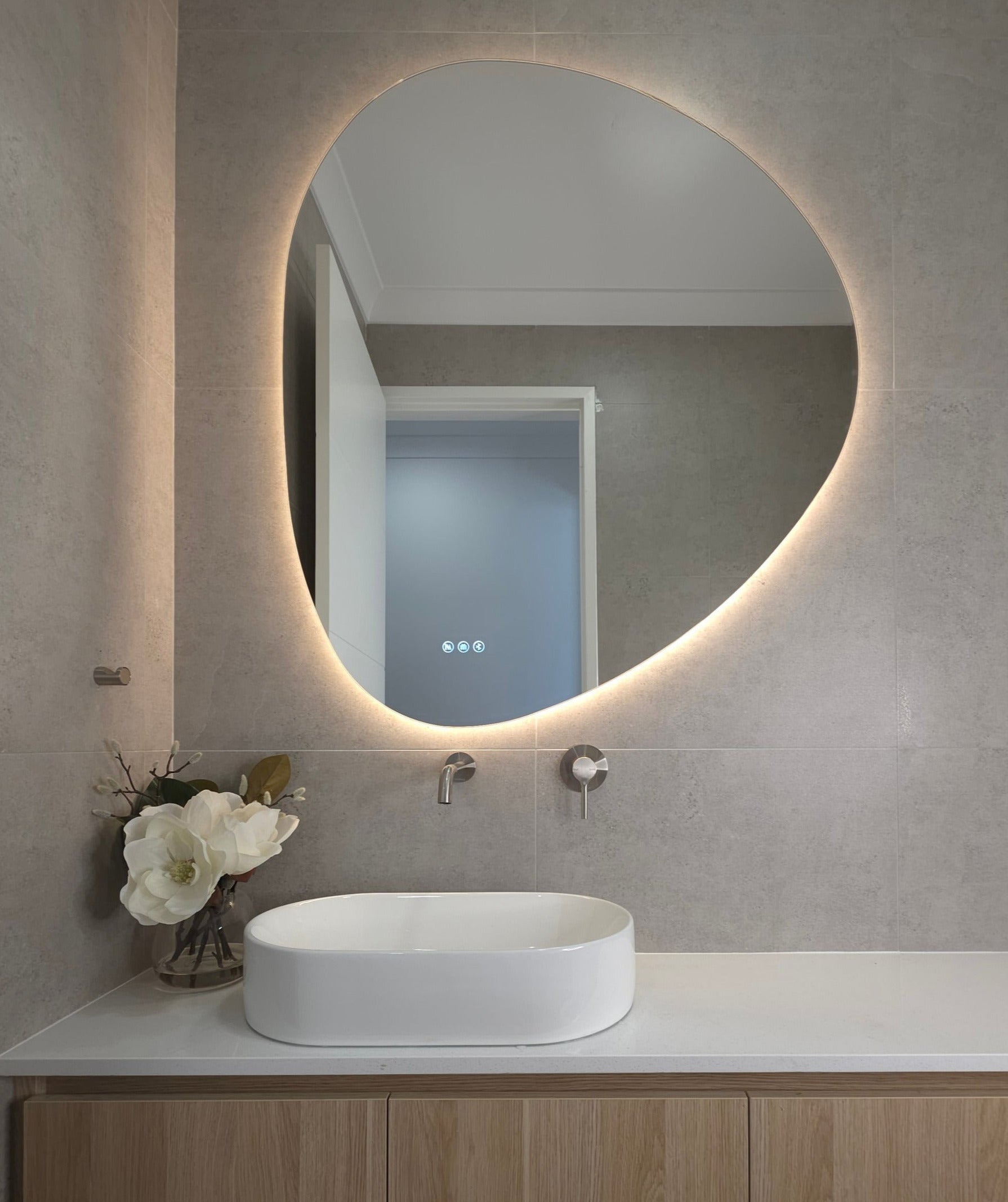
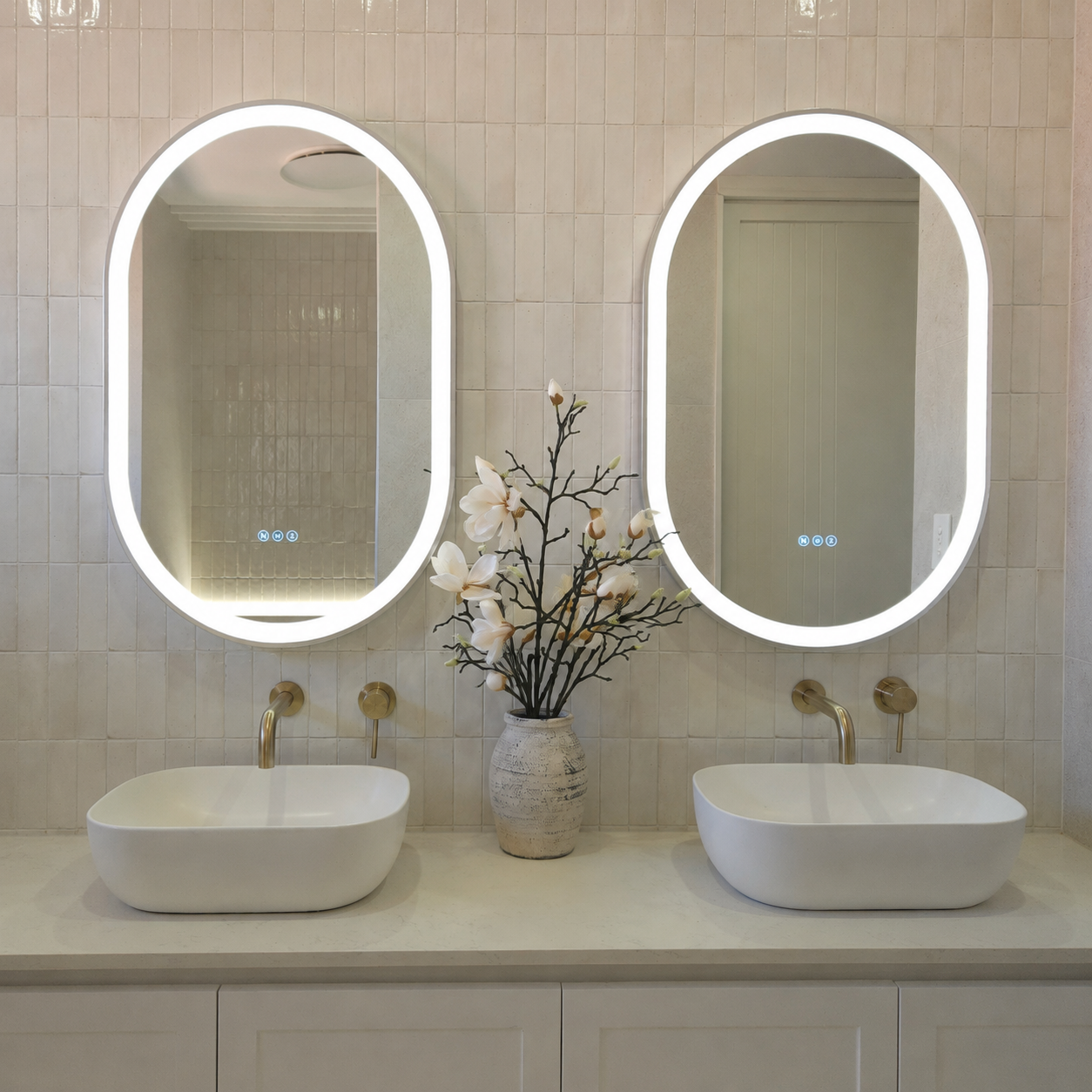
Vanity width directly determines the ideal mirror or mirror cabinet width — as a general rule, sizing the mirror to match or come close to the vanity's width creates the cleanest, most proportionate result. A mirror noticeably narrower than the vanity looks undersized, while one close to full width reads as intentional. For exact sizing guidance, see our Mirror Size Guide, and for double vanities specifically, see our Double Vanity Mirror Guide.
Designer Insight: good design begins with correct proportions, and vanity-to-mirror sizing is the clearest example of this in the entire bathroom — get this one ratio right and most of the room already feels considered.

Floating vs Floor-Standing Vanities
A floating vanity, mounted to the wall with no visible legs or base, opens up the floor beneath it, making the room feel larger and easier to clean underneath. Installation requires wall reinforcement to support the weight, which is easier to plan during a full renovation than to retrofit later. A floor-standing vanity sits directly on the floor, offering additional storage volume within its base and a more substantial, traditional appearance, with simpler installation that doesn't require the same wall reinforcement. Neither option is objectively better — the right choice depends on the room's style, the household's storage needs, and how much wall reinforcement work the renovation budget allows for.
| Consideration | Floating Vanity | Floor-Standing Vanity |
|---|---|---|
| Appearance | Light, contemporary, spacious | Substantial, traditional |
| Cleaning | Easier — clear floor beneath | Requires cleaning around the base |
| Storage | Slightly less, but floor space gained | More storage volume overall |
| Installation | Requires wall reinforcement | Simpler, no reinforcement needed |
| Best applications | Contemporary, minimalist, small bathrooms | Family bathrooms, traditional styling |
Choosing the Right Vanity Material
Timber brings genuine warmth and texture, suiting coastal, Japandi and organic modern bathrooms, though it requires more careful maintenance in humid environments. Timber-look laminate offers a similar appearance at a lower cost and with easier maintenance, making it a practical choice for family bathrooms. Polyurethane finishes provide a smooth, durable, easy-to-clean surface available in almost any colour, suiting contemporary and minimalist styling. Stone tops and engineered stone deliver a premium, durable benchtop surface with natural or consistent veining, standing up well to daily use. Solid surface materials offer a seamless, non-porous benchtop that resists staining, a practical choice for busy family bathrooms.
Beyond the benchtop, the cabinetry material itself affects both longevity and maintenance. Moisture-resistant carcass construction is worth prioritising in any bathroom, since humidity exposure is constant regardless of how well the room is ventilated. Higher-quality hinges and drawer runners, while less visible than the finish, are often what separates a vanity that still feels solid after a decade from one that starts to feel worn within a few years.
Matching Your Vanity With a Mirror
Mirror proportions should follow the vanity's width closely, and mirror shape should suit the room's existing lines — see our Round vs Arch vs Rectangle Bathroom Mirrors guide for the full breakdown. Lighting style, whether frontlit, backlit or combined, should match how the bathroom is actually used day to day. Choosing between a frameless or framed mirror comes down to the room's overall style — frameless suits most contemporary bathrooms, while a framed mirror can suit more traditional interiors.
For bathrooms needing storage as well as reflection, a mirror cabinet solves both in the same footprint as a standard mirror — worth strong consideration whenever the vanity itself doesn't offer enough storage on its own. For the complete mirror-selection process, see our Ultimate Bathroom Mirror Buying Guide, and for cabinets specifically, see our Ultimate Mirror Cabinet Buying Guide.
Designer Insight: a well-proportioned mirror can make an average vanity look genuinely premium. Proportion does more visual work than material cost in most bathrooms.

Choosing Tapware for Your Vanity
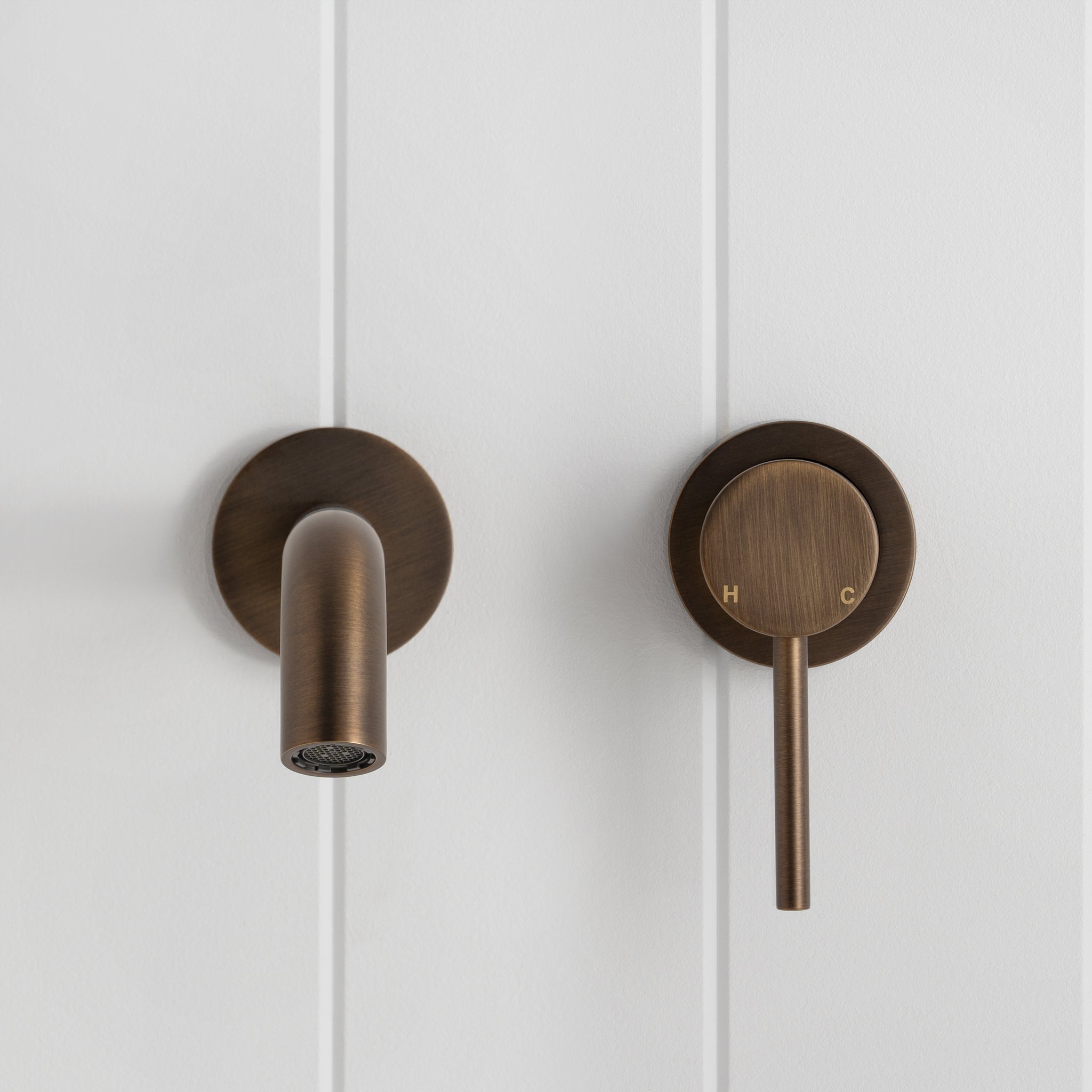
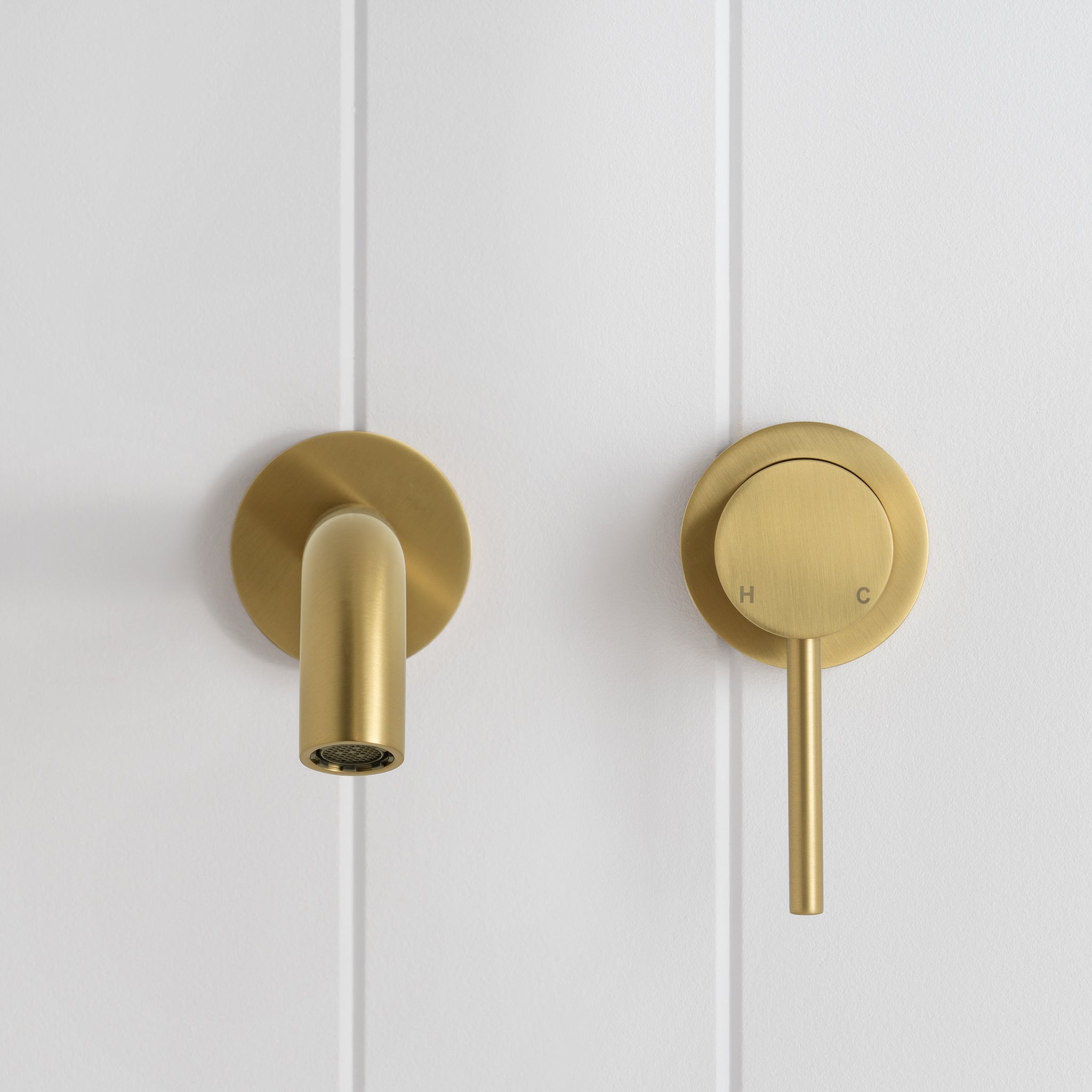
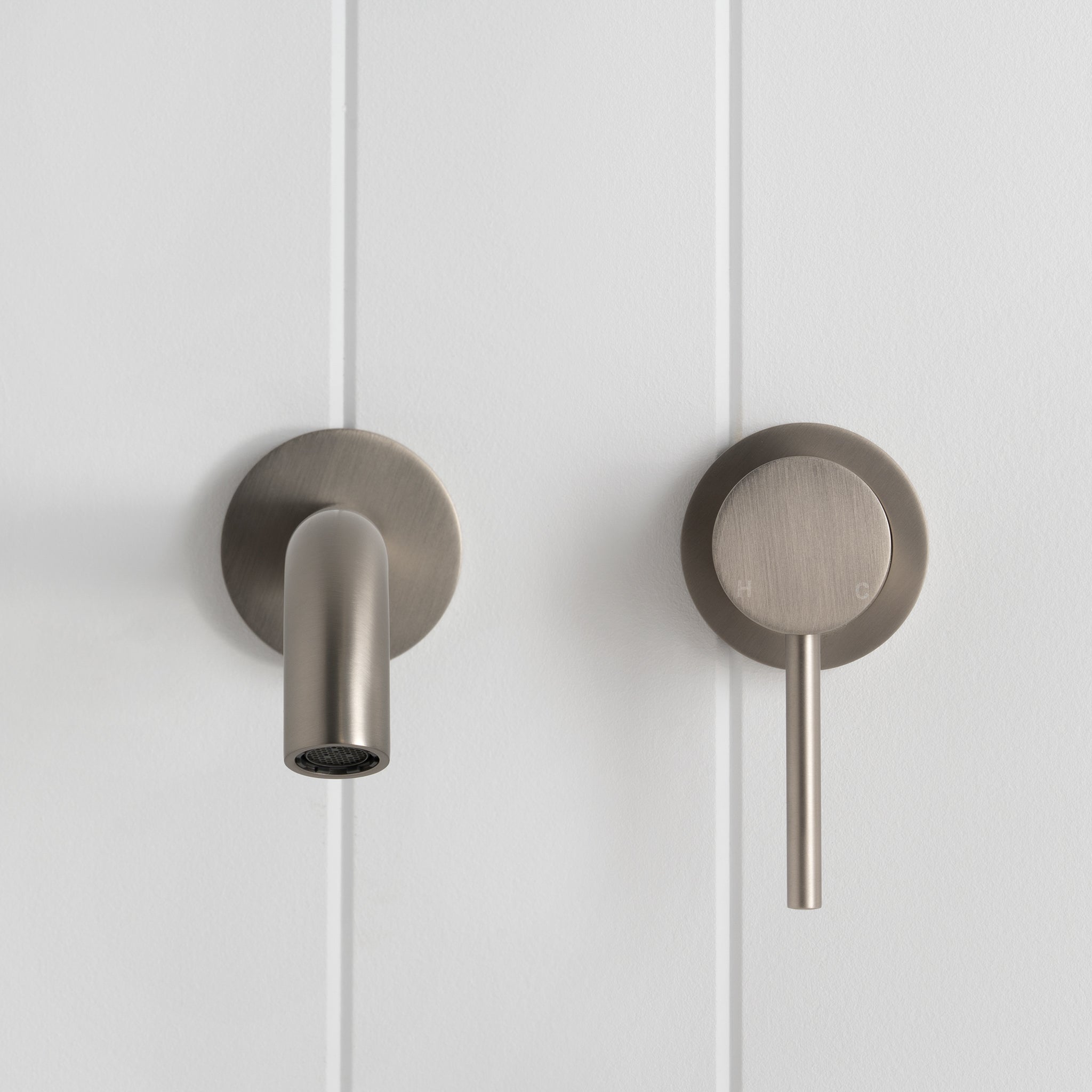
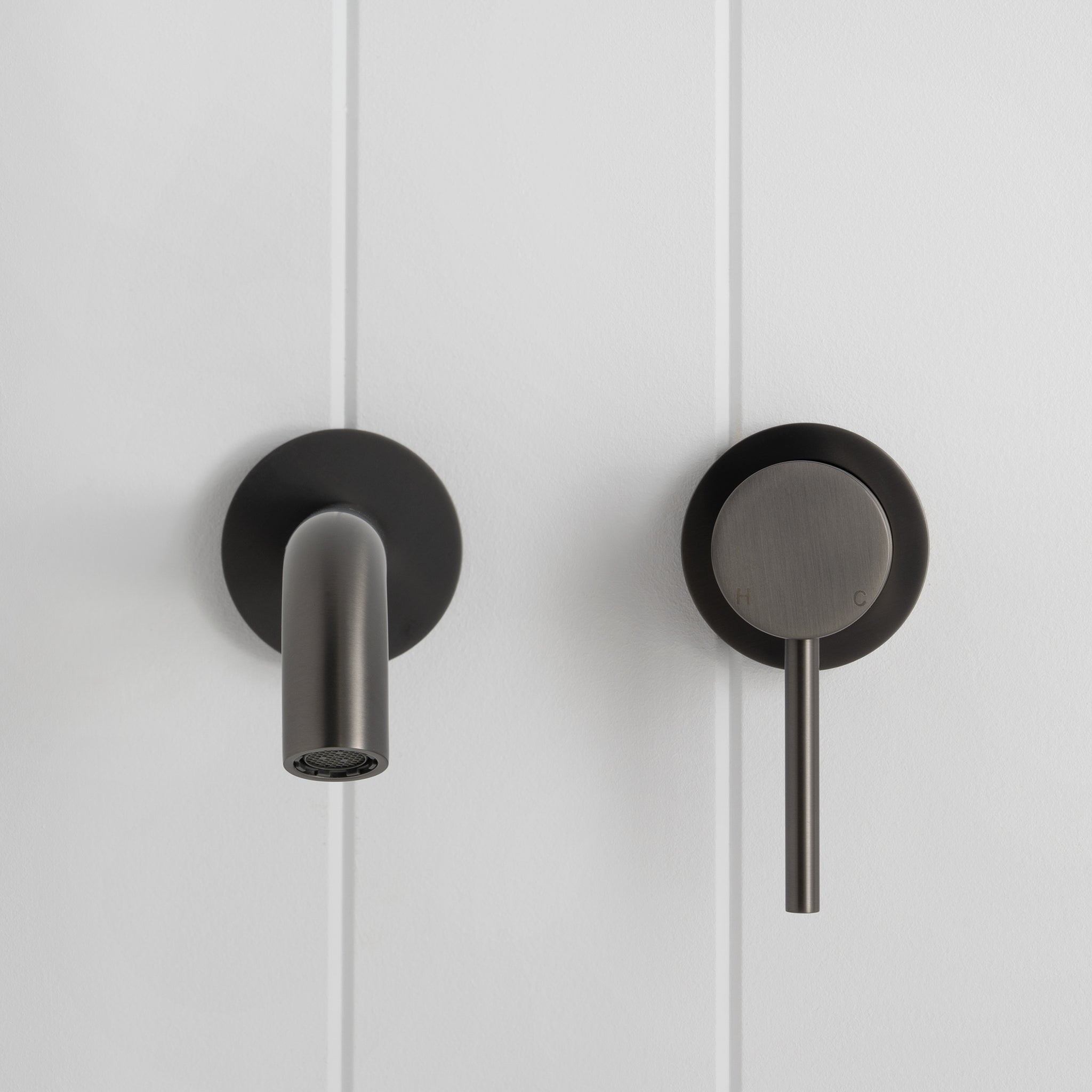
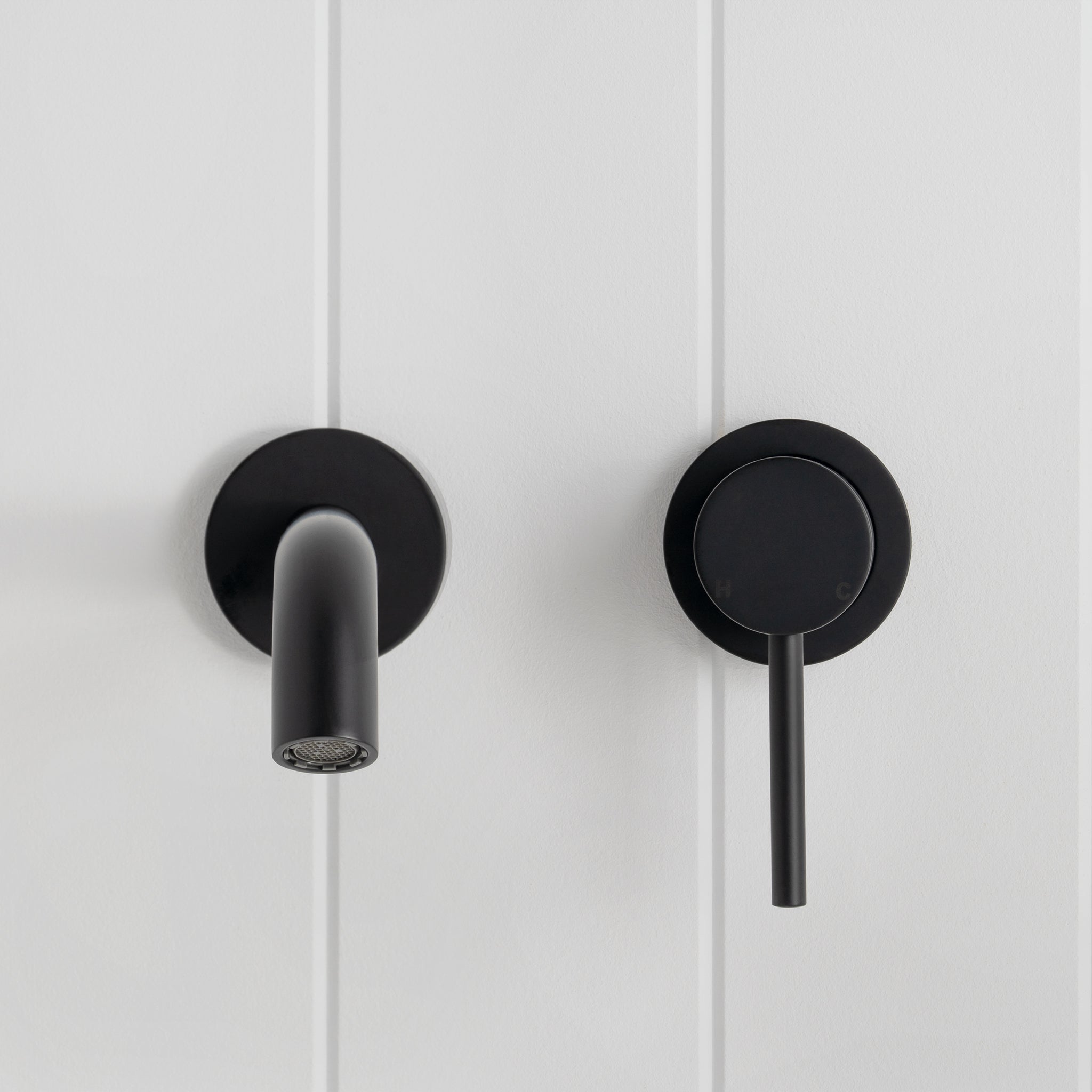
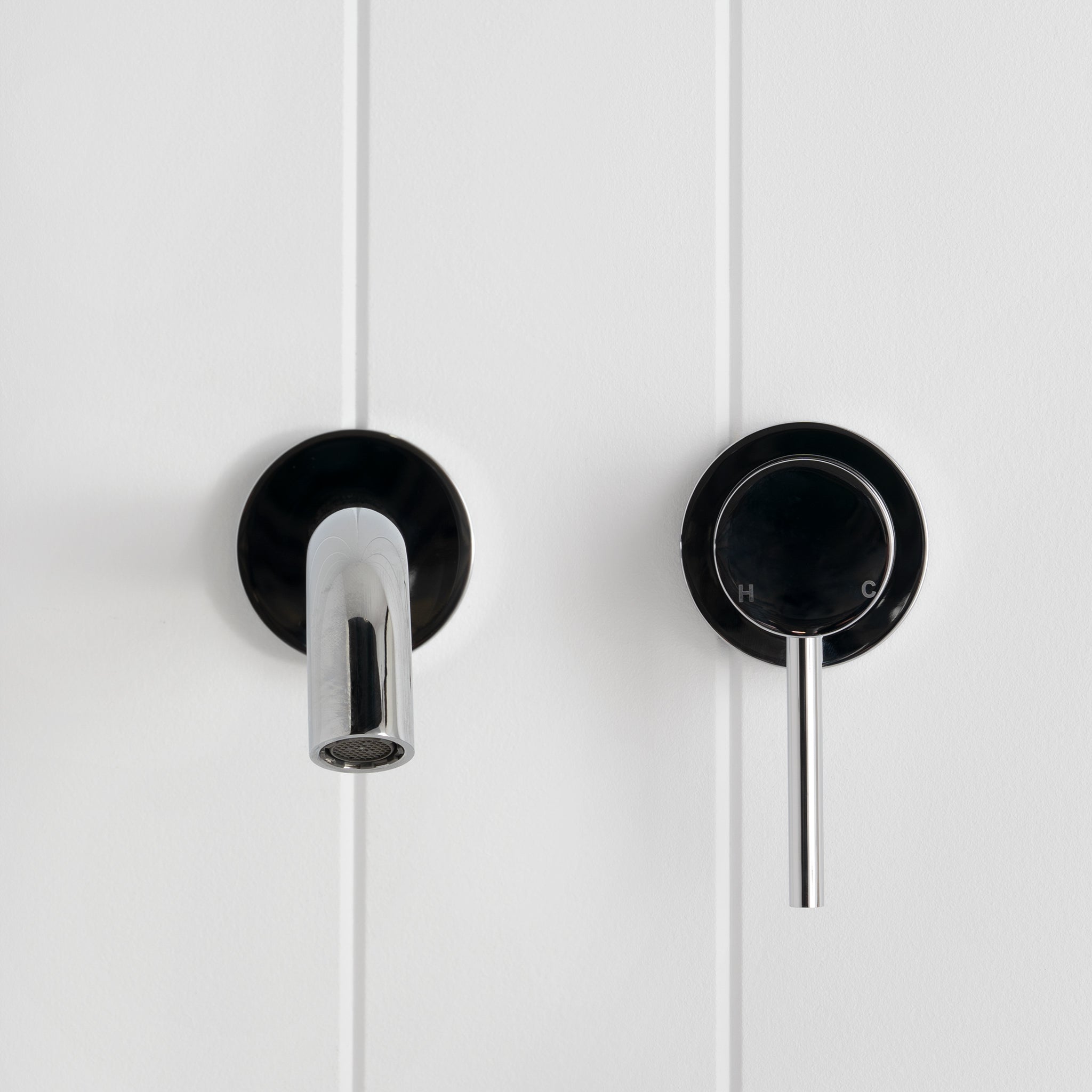
A basin mixer, mounted directly on the vanity top, suits most standard installations and offers straightforward maintenance access. Wall-mounted tapware creates a cleaner benchtop line and suits contemporary and minimalist bathrooms, though it requires wall plumbing to be planned during renovation. Beyond function, finish coordination across tapware, mirror frame and cabinet hardware is what makes a bathroom feel considered rather than assembled piece by piece.
Brushed brass and antique brass bring warmth suited to Hamptons and traditional interiors. Brushed nickel and chrome suit transitional and classic bathrooms with a slightly cooler tone. Matte black and gunmetal suit contemporary and industrial bathrooms wanting a bolder, more structural finish. Whichever finish is chosen, consistency across tapware and mirror or cabinet hardware is what ties the room together. It's worth choosing tapware and mirror or cabinet hardware at the same time, rather than sequentially, since matching an already-chosen finish later is far harder than coordinating both from the start.
Vanity Recommendations by Bathroom Type
Small Bathrooms
A compact 600-750mm vanity, ideally floating, keeps the floor visually clear and makes the room feel larger than its actual footprint. Prioritise a single well-organised storage cavity over multiple smaller compartments, which tend to fragment limited space further.
Family Bathrooms
A 900-1200mm vanity with generous internal storage supports multiple daily users without compromising on counter space. Where possible, choose a configuration with adjustable internal shelving, since a family's storage needs tend to change significantly as children grow.
Apartments
A compact floating vanity, paired with a slim mirror cabinet, maximises both floor space and storage in a constrained footprint. This combination is particularly effective in rental or apartment renovations where structural changes to the wall aren't practical.
Luxury Ensuites
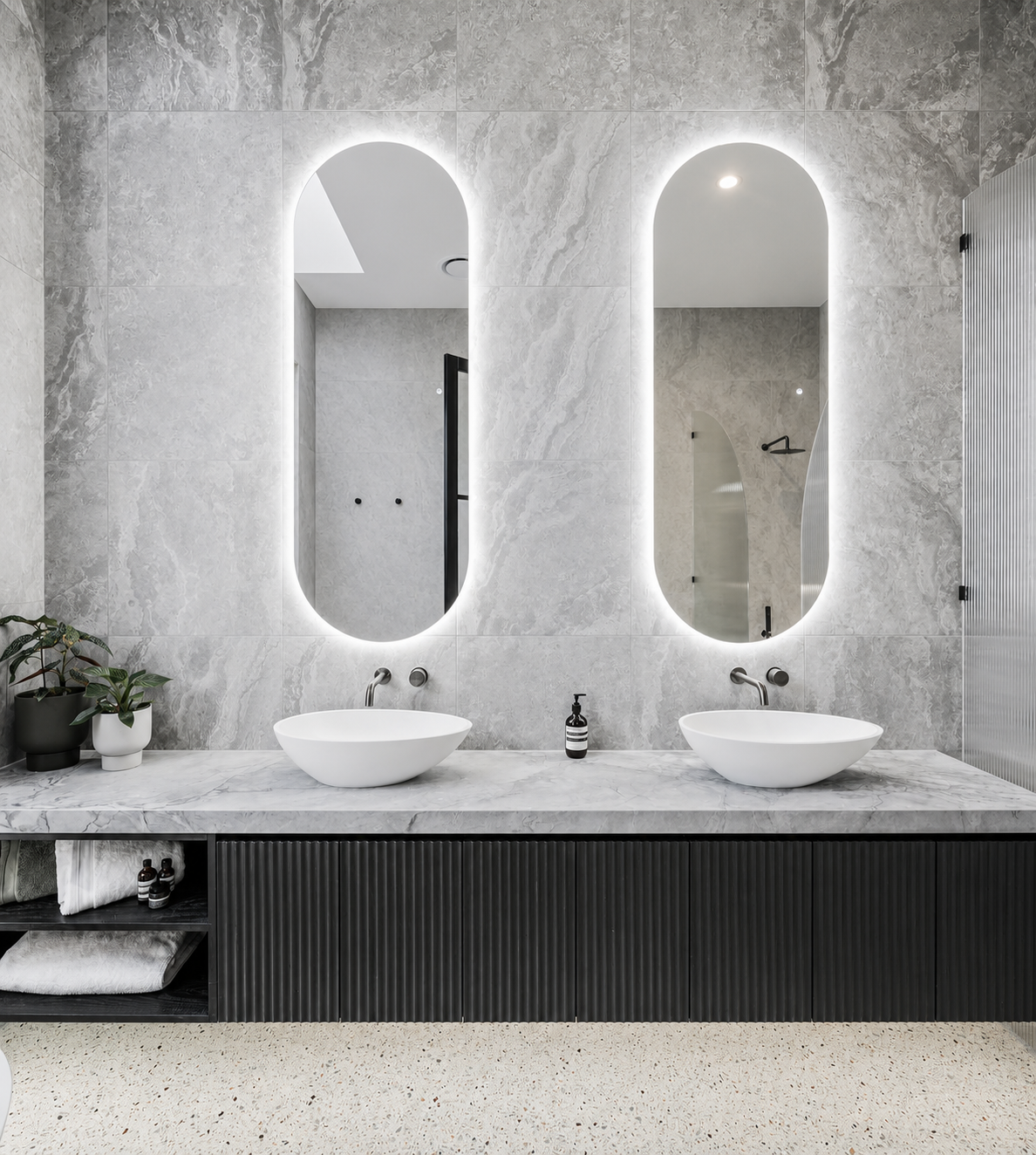
A 1500mm-plus double vanity in stone or engineered stone, paired with an oversized backlit mirror, delivers the scale and material quality associated with luxury bathrooms. Symmetry matters more here than in almost any other bathroom type — matching basins, tapware and mirror placement reinforces the sense of considered design.
Guest Bathrooms
A simple 750-900mm vanity with moderate storage covers occasional-use needs without unnecessary expense. Since guest bathrooms see lighter daily use, prioritise presentation and a clean, welcoming first impression over maximum storage capacity.
Powder Rooms
A compact 600mm vanity, often paired with a statement mirror, suits a room used briefly and rarely for detailed routines. With no shower or bath to plan around, this is often the one room in the house where a bolder material or finish choice carries the least risk.

Common Vanity Buying Mistakes
- Too little storage: a vanity chosen for looks alone often leaves a household short on everyday storage.
- Wrong proportions: a vanity sized to the wall rather than the room's actual proportions rarely looks intentional.
- Choosing style over function: a beautiful vanity that doesn't suit daily routines becomes a daily frustration.
- Poor mirror pairing: a mirror sized without reference to the vanity rarely looks proportionate.
- Ignoring lighting: vanity and mirror lighting should be planned together, not as separate decisions.
- Not planning electrical: floating vanities and LED mirrors both need power and wall reinforcement confirmed early.
- Incorrect tapware height: tapware positioned without reference to the basin and mirror can look and feel wrong immediately.
Designer Insight: storage should support routines, not simply hide clutter after the fact. A vanity sized correctly for daily use prevents the clutter problem before it starts, rather than requiring extra storage later to manage it.

Expert Designer Recommendations
Designer's Rules
- Choose the vanity first — every other major decision follows its proportions.
- Size the mirror or cabinet to the vanity's width, not the wall's.
- Coordinate tapware finish with the mirror or cabinet hardware from the outset.
- Plan storage around how the household actually uses the room, not just its appearance.
Comparison Tables
Vanity Size → Ideal Mirror Width
| Vanity Size | Ideal Mirror Width |
|---|---|
| 600mm | 500-600mm |
| 750mm | 650-750mm |
| 900mm | 800-900mm |
| 1200mm | 1000-1200mm |
| 1500mm+ | 1200-1500mm, or a symmetrical pair |
Bathroom Type → Recommended Vanity
| Bathroom Type | Recommended Vanity |
|---|---|
| Small bathroom | 600-750mm, floating |
| Family bathroom | 900-1200mm, generous storage |
| Apartment | Compact floating vanity |
| Luxury ensuite | 1500mm+ double vanity, stone top |
| Guest bathroom | 750-900mm, moderate storage |
| Powder room | 600mm, statement mirror pairing |
Material → Pros & Cons
| Material | Pros | Cons |
|---|---|---|
| Timber | Warm, natural texture | Needs careful maintenance in humidity |
| Timber-look laminate | Affordable, easy maintenance | Less authentic texture than real timber |
| Polyurethane | Durable, wide colour range | Can feel less premium than stone |
| Engineered stone | Durable, consistent appearance | Higher cost than laminate options |
| Solid surface | Seamless, stain-resistant | Can show scratches over time |
Household → Storage Recommendations
| Household | Storage Recommendation |
|---|---|
| Single occupant | Compact vanity, single mirror cabinet |
| Couple | 900-1200mm vanity, matched storage |
| Family with children | 1200mm+ vanity, generous zoned storage |
Frequently Asked Questions
What size vanity do I need?
This depends on the room's dimensions and household size — as a general guide, 600-750mm suits small bathrooms, 900-1200mm suits standard and family bathrooms, and 1500mm or more suits double vanities.
Should I choose a floating vanity?
Floating vanities suit most contemporary bathrooms and make cleaning easier, provided the wall can be reinforced to support the weight. Floor-standing remains a practical choice for family bathrooms needing extra storage, or where the renovation budget doesn't extend to additional wall reinforcement work.
What mirror size suits a 900mm vanity?
A mirror between roughly 800-900mm wide creates the most proportionate result over a 900mm vanity.
How much storage is enough?
Enough to comfortably hold each household member's daily items without overcrowding — a mirror cabinet is a practical way to add storage without expanding the vanity itself. As a rough guide, allow more capacity than feels necessary at the time of renovation, since storage needs tend to grow rather than shrink over a household's time in the home.
What tapware suits a floating vanity?
Both basin-mounted mixers and wall-mounted tapware work well with a floating vanity; wall-mounted tapware creates an even cleaner line if a fully minimalist look is the goal.
Should I install one mirror or two over a double vanity?
Both work — one large mirror suits a more contemporary, unified look, while two matching mirrors reinforce the vanity's natural symmetry. See our Double Vanity Mirror Guide for the full comparison.
Designer's Cheat Sheet
Designer's Cheat Sheet
- ✔ Choosing your renovation order? → Vanity first, mirror second, tapware third
- ✔ Small bathroom? → 600-750mm, floating
- ✔ Family bathroom? → 900-1200mm, generous storage
- ✔ Double vanity? → 1500mm+, matched mirror pairing or one wide mirror
- ✔ Unsure on tapware finish? → Match it to your mirror or cabinet hardware
Conclusion
The best bathroom vanity isn't simply the largest or most expensive one — it's the one that balances proportion, storage, material and functionality for your specific household. Getting the vanity right first creates a genuine foundation for every decision that follows: the mirror size that suits it, the lighting that complements it, and the tapware finish that ties the whole room together. Renovations that follow this sequence — vanity, then mirror, then lighting, then tapware — consistently produce more cohesive results than those where each fixture is chosen in isolation.
Ready to complete the room around your vanity? Explore our complete Smart Mirrors, Mirror Cabinets and Tapware collections, or browse our Best Sellers if you're not sure where to start.
Where To Next?
- Start here: The Ultimate Bathroom Mirror Buying Guide (2026 Edition)
- Related guides: The Ultimate Mirror Cabinet Buying Guide (2026 Edition), Bathroom Lighting Guide, How to Choose the Right Mirror Size for Your Vanity, Round vs Arch vs Rectangle Bathroom Mirrors, Double Vanity Mirror Guide: One Large Mirror or Two Mirrors?, Bathroom Storage Ideas: 23 Smart Ways to Create a More Organised Bathroom, Bathroom Renovation Mistakes: 21 Costly Mistakes to Avoid Before You Build and LED Mirror Features Explained
- Browse: the full Smart Mirrors range
- Need storage: the full Mirror Cabinets range
- Complete the room: our Tapware range
- Not sure where to start: our Best Sellers


